Professor Roland Eils, academician of the German National Academy of Sciences, and his delegation came to the school for an exchange visit
- IMIC Lab
- News , Comprehensive news
- May 16, 2026
On the afternoon of May 14, Professor Roland Eils, academician of the German National Academy of Sciences and executive director of the Institute of Intelligent Medicine of Fudan University, and his delegation were invited to visit our school. The accompanying experts include professors and researchers from Fudan University, Charité Berlin, Freie Universität Berlin, Max Planck Institute for Heart and Lung Research in Germany, as well as Ms. Liu Yuting, scientific research director of the Institute of Intelligent Medicine of Fudan University, and Mr. Li Jiebing, an industrial consultant. Representatives from Su Chang Co., Ltd. (Hong Kong), Jiangsu Soho Xinzhi Group Co., Ltd. and other companies accompanied the visit.
At the Jiangsu Key Laboratory of Intelligent Medical Image Computing (IMIC) in the School of Artificial Intelligence, the two parties held a special symposium and exchange meeting in the field of intelligent medicine to conduct in-depth discussions on scientific research cooperation, talent training and other issues. The meeting was chaired by Professor Liu Hui from the IMIC Lab of the School of Artificial Intelligence of our school.
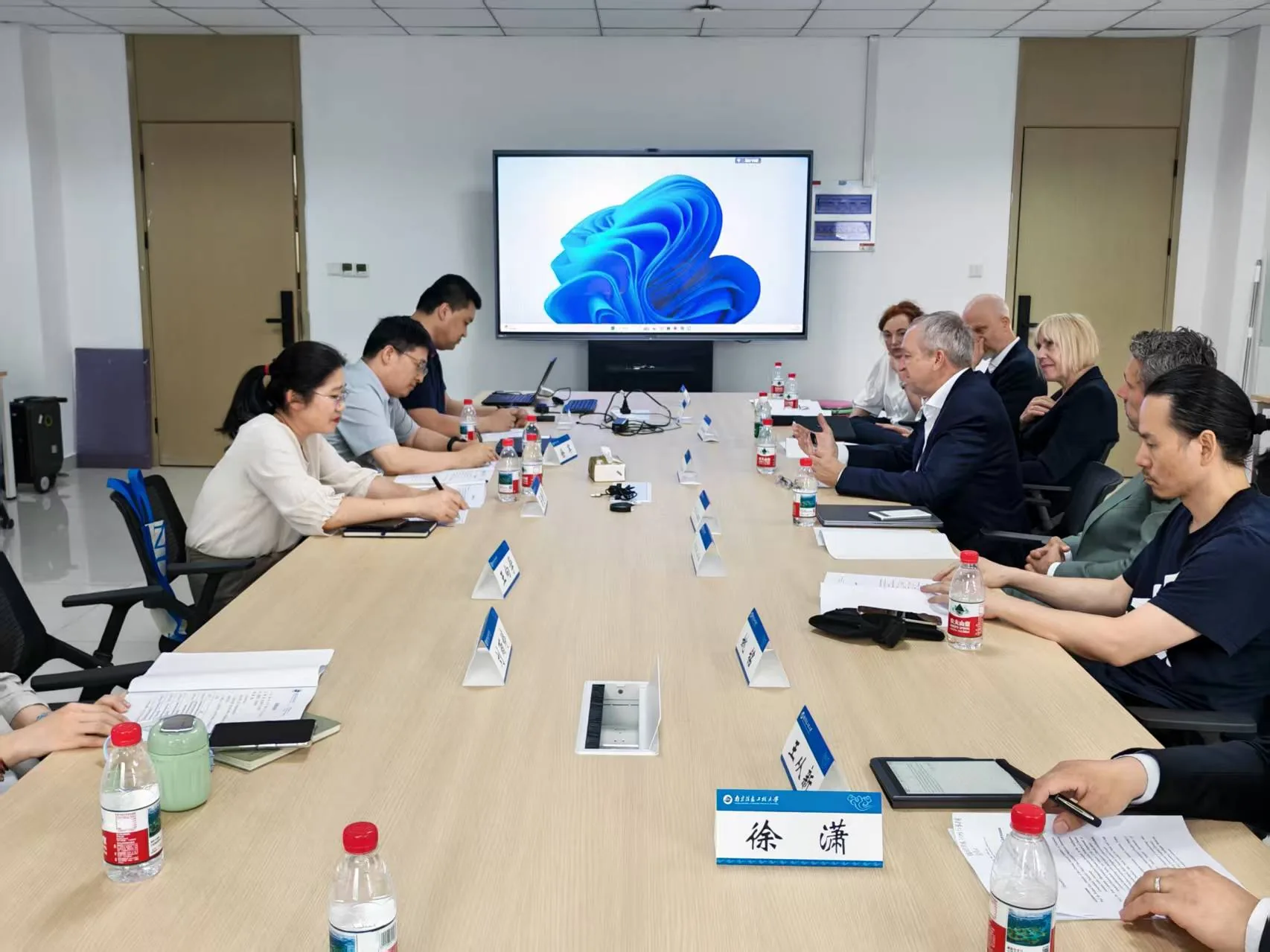
Discussion and exchange
Professor Xu Jun, deputy dean of the School of Artificial Intelligence, focused on reporting on the school’s work results in the construction of IMIC laboratories, research directions and team development in the field of intelligent medicine, and systematically demonstrated the scientific research layout and application exploration of our school in the field of cross-integration of artificial intelligence and medicine. Teachers Jiao Yiping, Ming Wenlong, Hu Danqing, Ren Mucheng, and Sun Hui from the IMIC Lab of the School of Artificial Intelligence gave special reports on computational pathology and its application in disease diagnosis, treatment, prognosis and treatment response, multi-omics and multi-modal fusion of medical data, artificial intelligence empowering lung tumor diagnosis and treatment, time-series medical data analysis and intraoperative hypotension prediction, wearable intelligent laryngeal vibration sensor and its speech reconstruction, etc.
After listening to the work report of the key laboratory, Academician Roland Eils provided detailed guidance on the laboratory-related work. He pointed out that the research and application value in the field of intelligent medicine is very significant: it can not only improve the efficiency and accuracy of doctors in early diagnosis, treatment and prognosis assessment of diseases, but also assist doctors in making better clinical decisions, and will also play an important role in preventive medicine. For example, through the development of smart health monitoring wearable devices for the general population, potential disease risks can be monitored in real time and intervened in a timely manner to prevent diseases from developing in a higher risk direction, thus reducing unnecessary health risks. In addition, intelligent medicine is also of great significance in the field of geriatric medicine. For example, the use of artificial intelligence technology can help the elderly achieve intelligent health care and risk warning. Academician Eils further emphasized that these artificial intelligence technologies can not only benefit the general population, but also significantly reduce the pressure on medical and health institutions, while helping government departments save a lot of money in population health management.
Academician Roland Eils and members of the delegation also spoke highly of the progress made by our school in cross-research on intelligent medicine, computational pathology and artificial intelligence, and introduced the research directions and cooperation visions of their respective teams. The two parties conducted in-depth exchanges on future international cooperation in joint application for scientific research projects, joint training of talents, and joint construction of platforms.
After the discussion and exchange, the delegation headed to the China-European Institute of Artificial Intelligence in Medicine (SEAM). Professor Liu Hui showed the guests SEAM’s latest research results and experimental equipment in the fields of intelligent medicine, wearable sensors, and multi-modal physiological signal analysis. Professor Roland Eils and members of the delegation showed great interest in the relevant exhibitions and conducted on-site exchanges on potential cooperation directions. In addition, the delegation also visited the campus and went to the school history museum to gain an in-depth understanding of our school’s history, campus culture and development achievements.
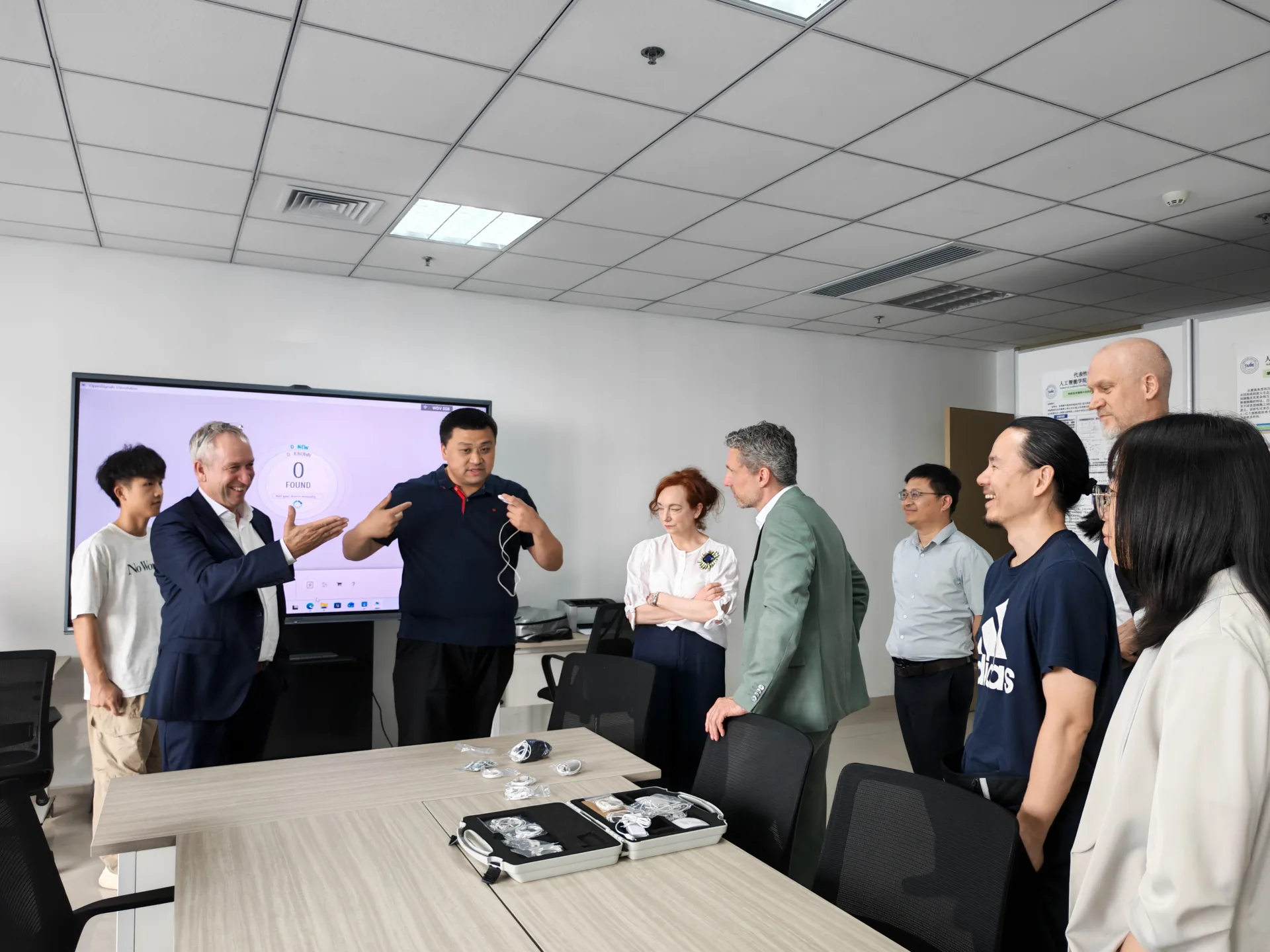
Laboratory tour
The visit of Professor Roland Eils and his delegation not only further strengthened the academic ties between our school and top international scientific research teams, but also laid a good foundation for promoting international cooperation in the fields of artificial intelligence and smart medicine. Both parties agreed that they would take this exchange as an opportunity to continue to deepen communication and actively promote the implementation of substantive cooperation.
Translated from the original Chinese source.