NEWER Biomedical Engineering 3+2 Bachelor's and Master's Bridge Program | Renew yourself and connect with the world - In NEWER, foresee your future
- IMIC Lab
- News , Comprehensive news
- April 1, 2026
Project introduction and vision
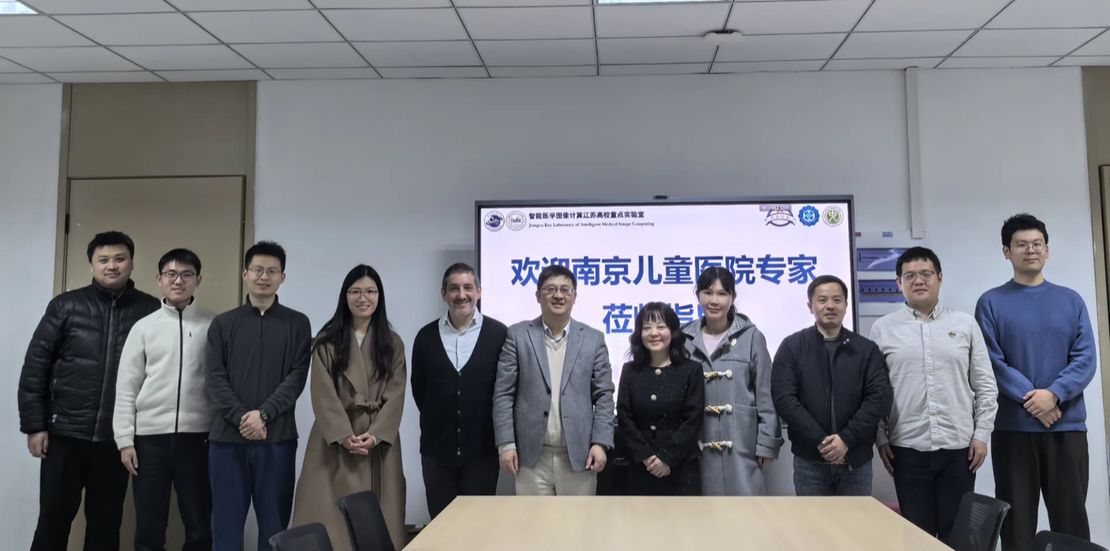
The “NEWER Biomedical Engineering Excellence Bridge Program” jointly launched by the Laboratory of Instrumentation, Biomedical Engineering and Radiation Physics (LIBPhys) of the New University of Lisboa (NOVA) in Portugal, the Key Laboratory of Intelligent Medical Image Computing (IMIC) of the School of Artificial Intelligence (College of Future Technology) of the Nanjing University of Information Science & Technology (NUIST), and the China-European Institute of Artificial Intelligence in Medicine (SEAM) is a 3+2 undergraduate and master’s degree integration project between Nanjing University of Information Science & Technology and the New University of Lisboa in Portugal. This project aims to further implement the strategic cooperation agreement between Nanjing University of Information Science & Technology and the New University of Lisboa in Portugal signed in July 2025, to build an education and scientific research bridge across Europe and Asia, and to deeply integrate the top faculty, teaching resources and unique advantages of the two universities in the field of biomedical engineering.
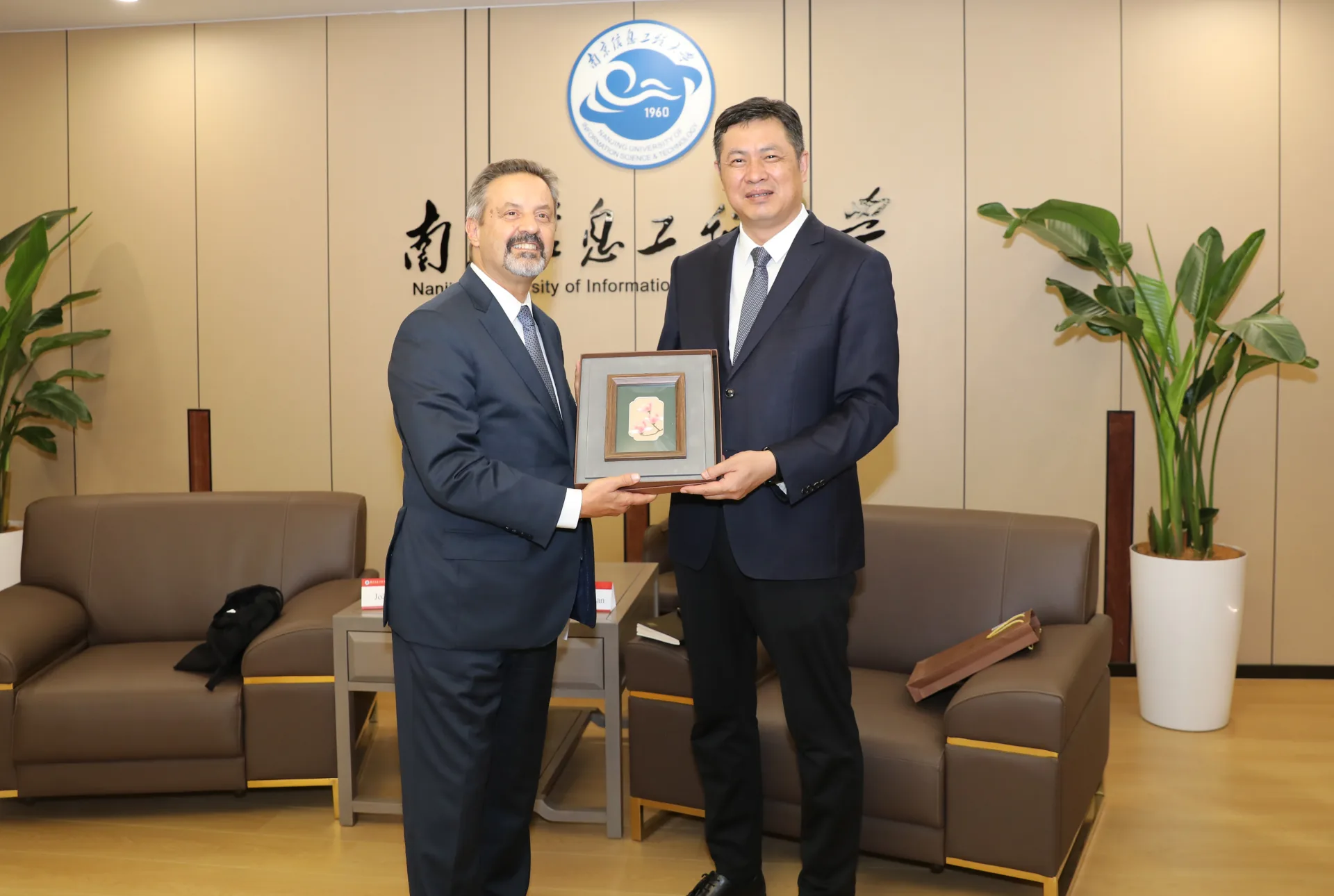
The NOVA-NUIST Biomedical Engineering 3+2 Program is committed to cultivating the next generation of global leaders in the field of biomedical engineering. This project selects third-year undergraduates from NUIST School of Artificial Intelligence (College of Future Technology) and related majors from other colleges who have a strong interest in the field of biomedical engineering. They will enter the biomedical engineering master’s program at NOVA starting from their fourth year of college, and at the same time complete the NUIST undergraduate thesis and related internships and engineering practices at NOVA. As a result, students participating in the program will experience a unique “double campus spanning Europe and Asia” learning experience. In the first three years at NUIST, I consolidated my knowledge of basic mathematics, programming and engineering courses featuring the intersection of information, computing and medical engineering. In the last two years, I spent the next two years at NOVA in-depth with Europe’s cutting-edge medical engineering research and innovative practices. The project relies on outstanding faculty in the field of biomedical engineering from two leading universities, NUIST and NOVA, and adopts a “dual mentor” system, under the guidance of outstanding scholars and industry experts from the two universities to ensure a deep integration of academic depth and industrial vision.
This is not only a two-year master’s program, but also a future-oriented scientific exploration in the field of biomedical engineering! The project will take scientific research as its soul and practice as its wings, and is committed to forging leaders and game-changers in the global medical and health technology field. From degradable smart biomaterials to organoid chips, from multi-modal cross-scale medical data analysis of text, molecules, cells, tissues, and organs, to wireless multi-modal physiological signal sensing, from bionic rehabilitation robots, surgical robots, to computational biomechanical modeling - students participating in this project will be immersed in the cutting-edge intersection of biomedical engineering, tempering their ideas in real problems, and personally defining possibilities in laboratories spanning Europe and Asia.
Participating in NEWER means stepping into a highly international academic community. Students will not only master an interdisciplinary knowledge system (integrating life sciences, electronic technology, intelligent science, computer information science, and engineering technology), but also develop collaboration and leadership skills in a cross-cultural environment. Graduates will become compound high-end talents with both engineering technology and medical insight and a good international perspective. They can shine in the fields of global medical device research and development, smart medical care, scientific research innovation or health industry management in the future.
origin of name
The name “Newer” has a profound meaning.
The origin of the word’s meaning, “Newer” is the comparative form between “Nova” (i.e. New) and “Newest” (same sound as NUIST). It is between the two, which perfectly symbolizes the core positioning of this project connecting the New University of Lisbon and Nanjing University of Information Science & Technology. It is not an end point, but a dynamic process that continues to evolve and stimulate each other.
Promise of growth: For every student, “Newer” represents a “newer” journey of transformation. It means that studying and living in a foreign country will bring about the renewal of knowledge, vision and self. This name promises that students participating in the project will no longer be just recipients of knowledge, but become pioneers of the “Forever Newer Generation” that is constantly iterating and daring to explore.
Teaching method
During my stay in Portugal, all courses were taught in English, with a global perspective and a zero-threshold welcome to every eager explorer. Say goodbye to cramming - here, the classroom extends into the laboratory, and the podium gives way to the experimental bench. You will independently design experiments, collect data, debug algorithms, and write papers in the top laboratories of LIBPhys and CEFITEC; you will discuss topics side by side with your tutors, customize exclusive course paths, and freely expand your interests in elective modules - your growth rhythm is defined by you.
From the first semester of your master’s degree, you are no longer a bystander, but a participant in the scientific research scene. Join a real team that is working on the EU Horizon project, national FCT key topics or clinical translation research; find inspiration from the real needs of industry partners such as GE Healthcare, Siemens Healthineers, Johnson & Johnson, PLUX and other industry partners; touch the temperature of life in the clinical scenes of NOVA Medical School and Portugal’s top affiliated hospitals - knowledge will have a heartbeat from then on; research will have echoes from then on.
Introduction to the Faculty of Science and Technology of the New University of Lisbon (FCT)
NOVA FCT is one of the three largest and most prestigious engineering and science colleges in Portugal. It is also the most internationally renowned polytechnic of the New University of Lisbon (NOVA). NOVA FCT has consistently ranked first among Portuguese engineering and science colleges all year round. Modern smart laboratories, ultra-precision imaging platforms, open and shared nano-characterization centers… open the door for you; and the two flagship scientific research teams LIBPhys and CEFITEC, rooted in the fertile intersection of physics, biology and medicine, are reshaping the future of medical technology with disruptive thinking.
Lisbon (Lisbon/Lisboa) - the coordinates of the city where you dream to set sail
Here, the morning light shines on the ancient stone walls of Belem Tower, and the evening breeze blows through the blue of the Tejo River estuary; you encounter street flamenco in the labyrinth-like alleys of Alfama, and think about algorithm optimization under the dome of La Pedrera - history and future resonate here, poetry and rationality coexist! Portugal has been on the list of “the safest and most livable countries in the world” for many years in a row: warm sunshine is available all year round, the cost of living is friendly and affordable, Michelin-starred food is at your fingertips, and art festivals, science and technology weeks, and Web Summits take turns - this is not studying abroad, but a rich life experience.


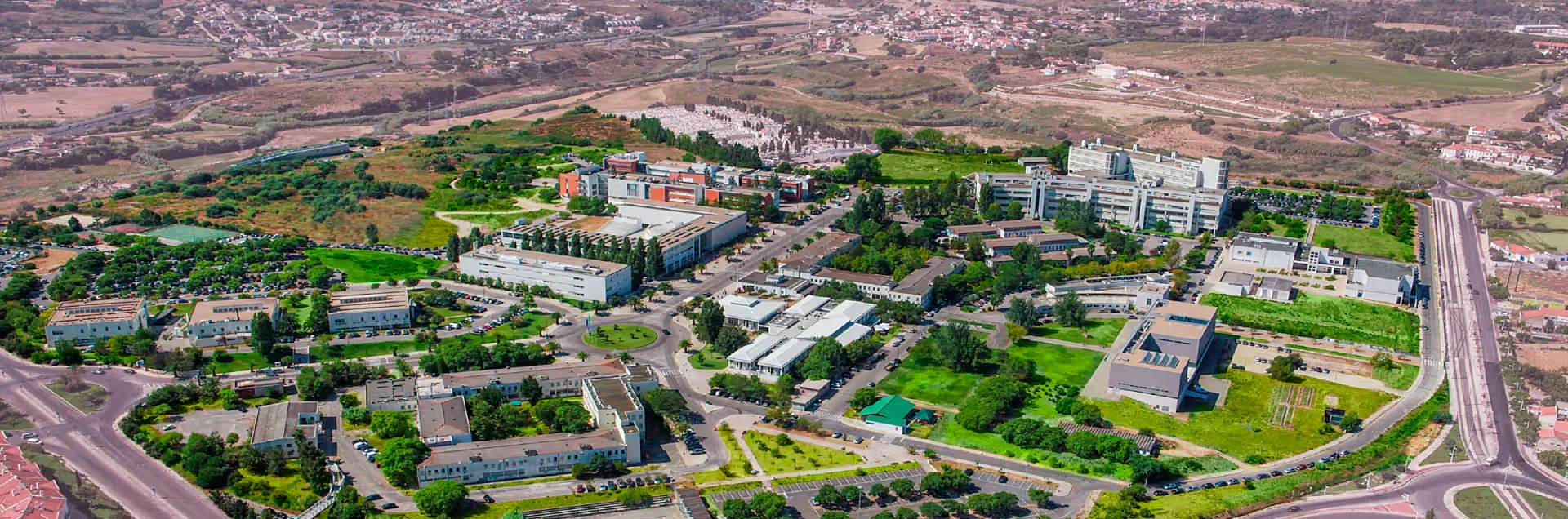
NOVA FCT is located on the Caparica campus, with magnificent views of the Atlantic Ocean and a quiet academic atmosphere. It is within walking distance of the golden beach and a 15-minute drive directly to the center of Lisbon - a perfect blend of academic excellence, natural gifts, and cultural feasts! The warm smiles of the Portuguese people, the full escort of the university’s international office, and the warm company of the cross-cultural partnership program will make you feel a sense of belonging on the first day.
Direct train to doctoral degree, full escort of scholarships
Graduates of the NEWER 3+2 program enjoy a natural “dimension-upgrading channel” - outstanding candidates can seamlessly connect to the NOVA FCT doctoral program, and receive full support from the mentor team to apply for the Portuguese FCT national full scholarship, the EU Marie Curie Scholars Program, and the ERC You will also continue to serve as a bridge and messenger with Nanjing University of Information Science & Technology, especially the School of Artificial Intelligence (College of Future Technology), the Jiangsu Key Laboratory of Intelligent Medical Image Computing, and the China-Europe Medical Artificial Intelligence Research Institute, and write brilliant words for the friendship between the two universities, the two cities, and even the two countries. We will support you with all our efforts to support your scientific research dreams and your desire to connect internationally.
Contact person for this project
Professor Xu Jun, email: jxu@nuist.edu.cn
Professor Hugo Gamboa, email: hgamboa@fct.unl.pt
Professor Liu Hui, email: hui.liu@nuist.edu.cn
Undergraduate students from Nanjing University of Information Science & Technology who are interested in this project are welcome to join the QQ discussion group: 1095724803
Master’s program briefing
Time: April 10 (Friday) 15:00
Venue: Lecture Hall, 2nd Floor, Binjiang Building, Nanjing University of Information Science & Technology
Participants: All juniors, sophomores and first-year students from the School of Artificial Intelligence (College of Future Technology) and our school who are interested in the field of biomedical engineering are welcome to attend.
Keynote speaker:
Ao Nianfei: An outstanding graduate of Nanjing University of Information Science & Technology, he received a full scholarship from the EU project and is currently a doctoral student in biomedical engineering at NOVA FCT. He received his bachelor’s and master’s degrees from Nanjing University of Information Science & Technology. During his master’s degree, he studied under Professor Xu Jun and delved deeply into the field of computational pathology. Currently, he is mainly engaged in research related to multi-modal physiological signal analysis;
Rodrigo Braga: An outstanding representative of the Master of Science in Biomedical Engineering from the New University of Lisboa in Portugal. He is currently a doctoral student in Biomedical Engineering at NOVA FCT. He shined all the way from master’s degree to doctorate, focusing on the research and development of wearable neural interfaces;
Hugo Gamboa: Tenured professor of NOVA FCT, European director of the China-Europe Institute of Medical Artificial Intelligence, part-time professor of Nanjing University of Information Science & Technology, authoritative expert in the field of biomedical engineering;
He Guangxin: Deputy Director of the International Cooperation and Exchange Office of Nanjing University of Information Science & Technology;
Xing Qian: Cooperation and Exchange Section, International Cooperation and Exchange Office, Nanjing University of Information Science & Technology;
Xu Jun: Vice Dean of the School of Artificial Intelligence (College of Future Technology), Nanjing University of Information Science & Technology, Director of Jiangsu Provincial University Key Experiments on Intelligent Medical Image Computing, and Chinese Director of the China-European Institute of Medical Artificial Intelligence;
Liu Hui: Professor at the School of Artificial Intelligence (College of Future Technology), Nanjing University of Information Science & Technology, winner of high-level overseas talents
Introduction to the faculty of the two schools in the field of biomedical engineering
The Jiangsu Key Laboratory of Intelligent Medical Image Computing at Nanjing University of Information Science & Technology has a faculty with international vision, young and dynamic, diverse sources, and cutting-edge research fields. Most of the teachers graduated from the top 200 universities in the world. Most of the teachers have overseas study or visiting experience, which can effectively support the 3+2 bachelor’s and master’s degree of this project and the highly international high-level talent training needs. For information about the IMIC laboratory faculty, welcome to visit the laboratory website: https://imic.nuist.edu.cn
Introduction to the Master of Biomedical Engineering (MEB) and the teaching staff of the Faculty of Science and Technology (FCT) of the New University of Lisbon, Portugal
The Master of Biomedical Engineering (MEB) is a rigorous, two-year, research-oriented degree program designed to cultivate the next generation of innovative talents in medical technology. Covering a wide range of subject areas - from biomaterials and tissue engineering, to biomedical instrumentation, signal and image processing, biomechanics and rehabilitation engineering - the MEB curriculum equips graduates with a deep scientific theoretical foundation and solid practical skills, enabling them to cope with real-life challenges in the fields of disease prevention, diagnosis and treatment.
The core teaching team of Biomedical Engineering (BME) at the Faculty of Science and Technology of the New University of Lisboa in Portugal:
Professor Hugo Gamboa — Full Professor. Research focuses include biosignal instrumentation, signal processing, and machine learning techniques applied to health monitoring. He is the founder of PLUX Wireless Biosignals. Its main research topics cover wearable sensing technology, electrocardiogram (ECG)/electromyography (EMG) classification, human activity recognition, occupational health assessment, and clinical decision support systems based on artificial intelligence (AI).
Professor Ricardo Vigário – Associate Professor and Program Coordinator of Biomedical Engineering. Research directions mainly focus on biological signal processing, electroencephalogram (EEG)/electrooculogram (EOG) signal analysis, machine learning technology applied to neurophysiological data, and human-computer interaction research in health situations.
Professor Célia Henriques — Associate Professor, coordinates the Master’s Program in Biomedical Engineering. His main research interests include the synthesis, processing and characterization of biomaterials for tissue engineering, assessment of cellular responses to materials, as well as nerve regeneration, skin regeneration, development of antimicrobial materials for skin substitutes, and nanobiomaterials research.
Professor Jorge Carvalho Silva – Associate Professor. His core scientific research interests lie in the regeneration of skin, bone/cartilage and neural tissue using naturally derived biomaterials with immunomodulatory and antimicrobial properties. He currently leads the Tissue Engineering Research Group, which he founded in 2007.
Professor Pedro Vieira — Associate Professor. The main research areas include instrumentation, machine learning and artificial intelligence algorithms, image processing, biomedical engineering and optical technology, and their application in multiple scientific fields. His early work focused on tomographic imaging technology based on scanning laser ophthalmoscopy; his current research work spans medical physics and biomedical signal and image acquisition technology.
Professor Valentina Vassilenko — Assistant Professor. Research focuses on the development of various devices, sensors and non-invasive detection methods for human health assessment, with a particular focus on cardiovascular disease, diabetes and cancer. Other major research topics include breath analysis instruments, analytical methods applied to biological matrices (especially ion mobility spectrometry), and the propagation mechanisms of heat and light energy in biological tissues. Professor Carla Quintão — Assistant Professor. Its research focuses on identifying neurophysiological, clinical and developmental markers in premature infants, aiming to strengthen early screening and timely intervention for the sequelae related to premature birth.
Professor Cláudia Quaresma — Assistant Professor. Mainly engaged in neonatal neurophysiology and biological signal classification research, specifically covering electroencephalogram (EEG) / electrooculogram (EOG) analysis, physiological noise processing in wearable device application scenarios, and classification and identification of cognitive attention states.
Professor Ana Londral — Assistant Professor. His research focuses on the intersection of assistive technology, digital health and remote patient monitoring. Key research topics include: artificial intelligence (AI)-based image analysis technology for early identification of changes in surgical wound conditions; digital follow-up care services in the field of cardiac surgery; and assistive communication technology for amyotrophic lateral sclerosis (ALS) patients.
Professor Sofia Pessanha Moreno — Assistant Professor. Its research mainly covers three major areas: First, research on sustainable methodologies for biomarker analysis, that is, using X-ray fluorescence spectroscopy (XRF) and Raman spectroscopy technology to improve the accuracy and efficiency of biomarker detection in early diagnosis of cancer, Parkinson’s disease and other diseases; second, research on spectroscopic tools for dental diagnosis.
Translated from the original Chinese source.