The key laboratory held a teacher-student seminar on "Physiological Signals and Wearable Devices"
- IMIC Lab
- News , Comprehensive news
- March 5, 2025
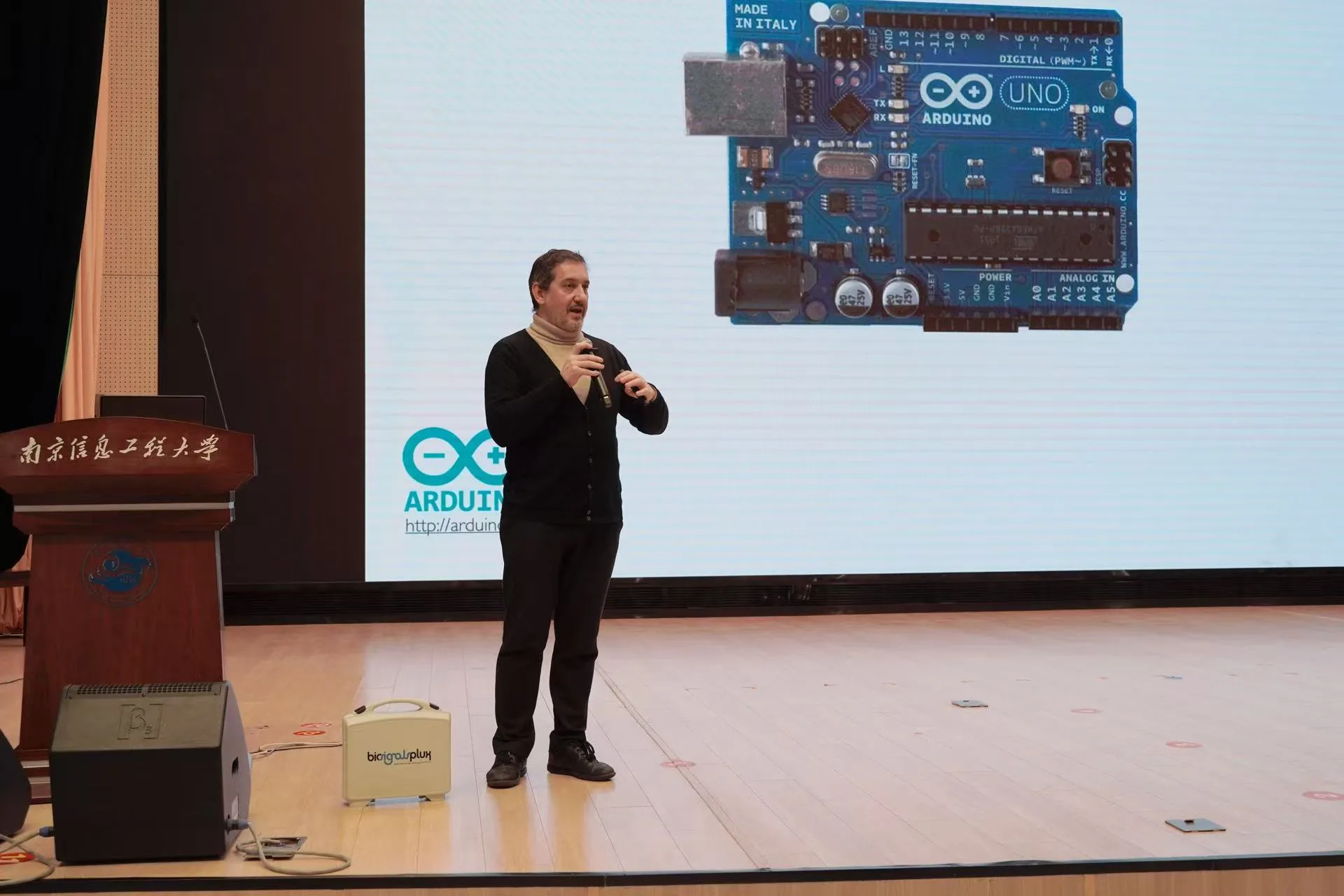
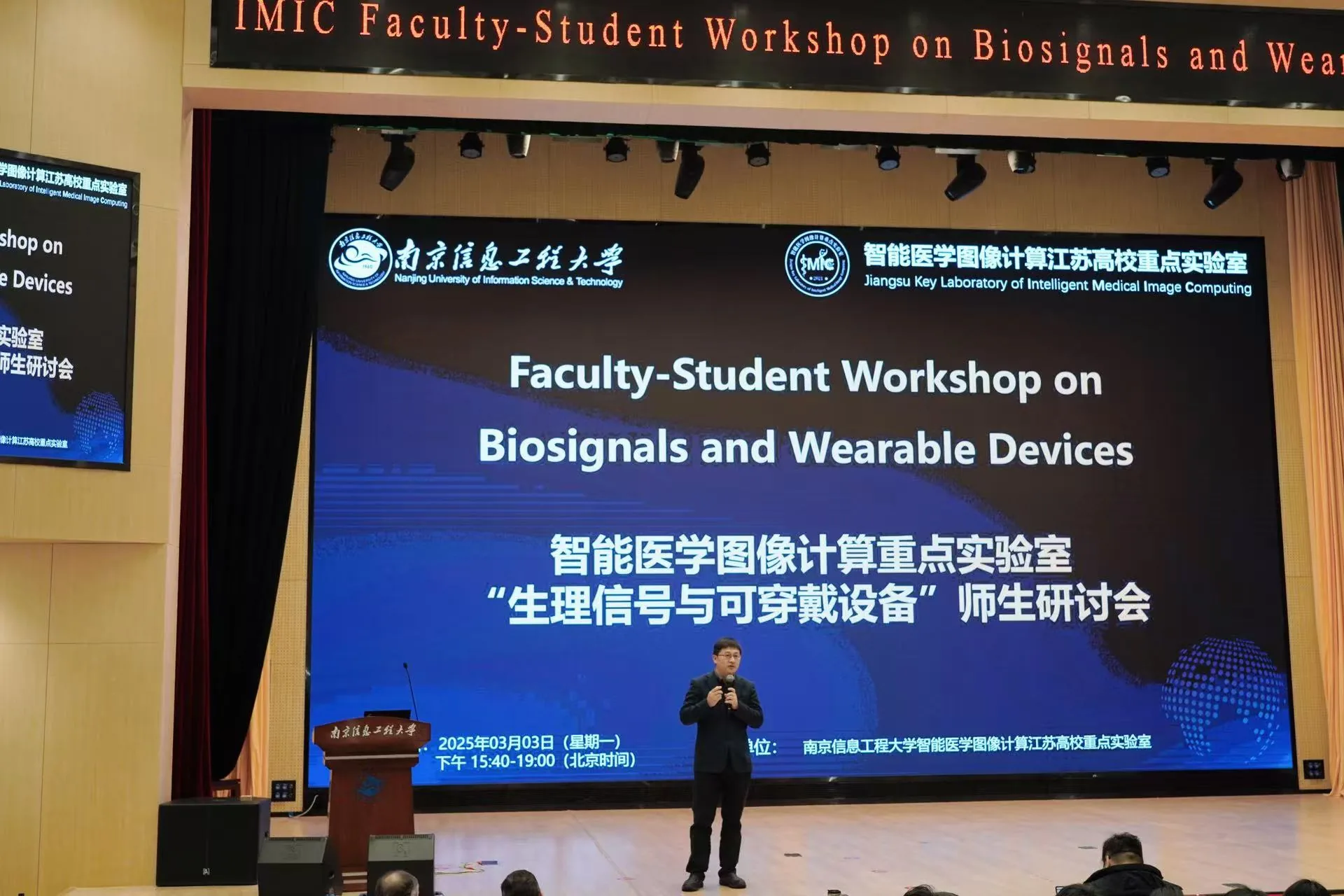
On the afternoon of March 3, the School of Artificial Intelligence, School of Future Technology, and Jiangsu University Key Laboratory of Intelligent Medical Image Computing successfully held a unique teacher-student seminar on “Physiological Signals and Wearable Devices” in Lecture Hall D of Linjiang Building. The meeting was chaired by Professors Xu Jun and Professor Liu Hui. Hugo Gamboa, tenured professor of the Department of Physics of the New University of Lisbon in Portugal, served as the speaker. Professor Filipe Silva of the University of Lisbon, Portugal, key laboratory teacher Ming Wenlong, and more than 200 undergraduates from the School of Artificial Intelligence, the School of Future Technology 2023-2024 Medical Information Engineering and Artificial Intelligence, and the 2025 School of Chinese Education participated in the discussion and exchange. Key laboratory teachers Liu Hui, Yang Weiyi, and Zhou Wei respectively demonstrated and introduced their research results in this field.
Professor Hugo first introduced his academic and scientific research experience and his birthplace - Lisbon, Portugal. Then, he introduced the topic of the lecture - the collection and monitoring of physiological signals. He held a high-precision sensor set and a small sensor teaching module, and showed everyone how to obtain his own physiological signals through sophisticated wearable sensing devices. Professor Hugo specially introduced different versions of bitalino module physiological signal acquisition cards. Each of them has unique functions, which provides great convenience for the accurate collection of physiological signals.
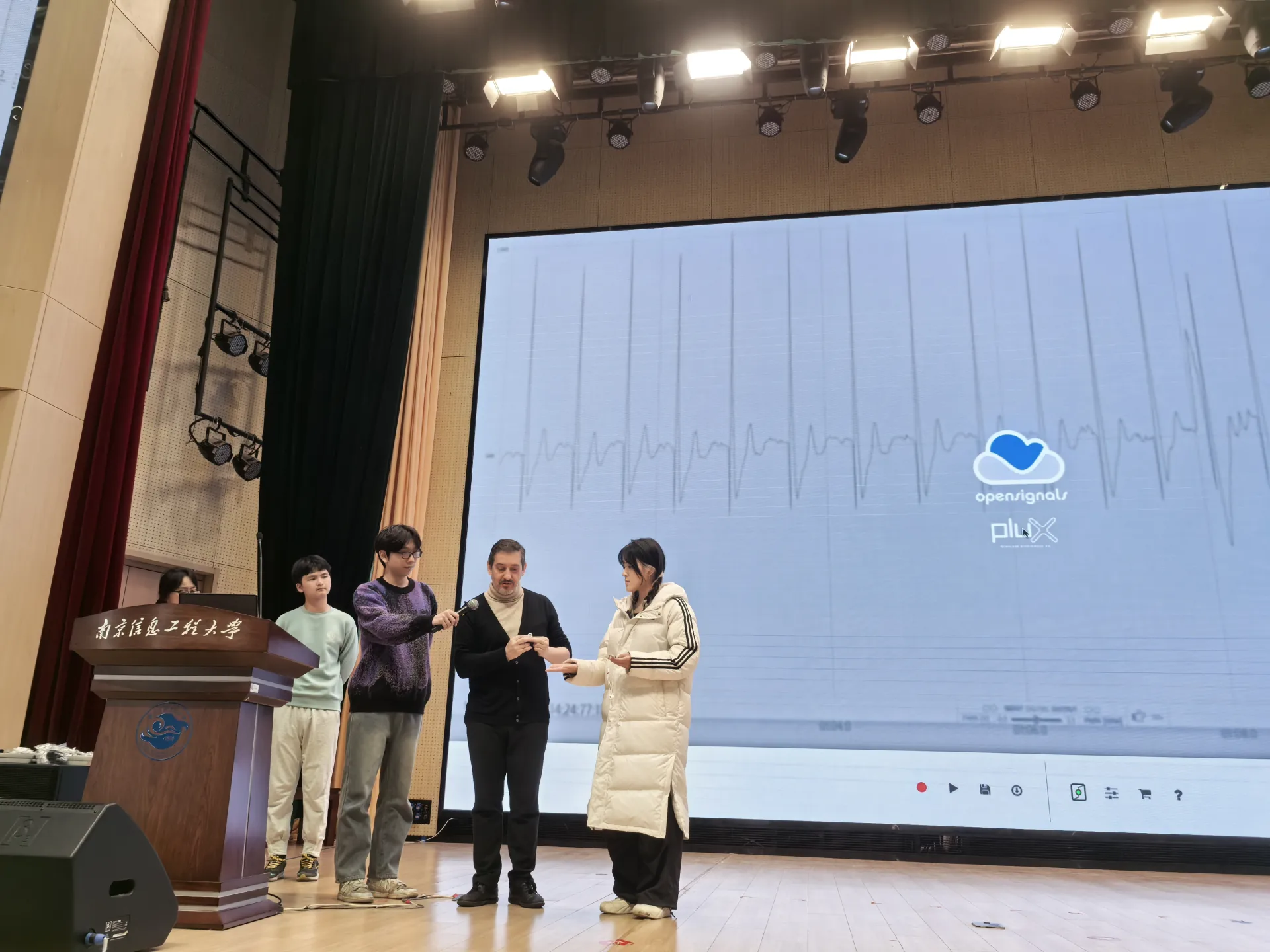
During the lecture, Professor Hugo focused on Opensignal PLUX, which makes the collection and analysis of physiological signals more intuitive and efficient. In order to deepen everyone’s understanding, he invited four students to the stage to personally experience the process of obtaining physiological signals from the students and monitoring them. Under the guidance of Professor Hugo, four students used wearable devices to measure their own electromyographic signals, electrocardiographic signals, skin signals and acceleration signals, and transmitted these signals to the computer via Bluetooth. This process not only demonstrates the accuracy of wearable devices in acquiring physiological signals, but also allows everyone to deeply feel the wonder of their own physiological signals. For example, advanced sensors can acquire electromyographic signals to distinguish the tense and relaxed states of students participating in the test. During the experience session, the students also raised many interesting questions. For example, can diseases be monitored by acquiring these physiological signals? Professor Hugo replied that EMG signals can reflect the health status of the human body and are of great significance for the detection and treatment of ADHD, myasthenia and other diseases. He also explained the role of accurate acquisition of ECG signals and EEG signals in disease prevention. ECG signals can detect heart problems early, assess risks, monitor chronic diseases, and promote health management. EEG signals can detect neurological diseases early, assess brain functional status, monitor mental health, and be used in brain-computer interfaces and neurofeedback. These physiological signals can also improve the prevention of related diseases through remote monitoring and personalized medicine. Regular ECG and EEG examinations are effective means of preventing heart and nervous system diseases. He also explained the signal interference problems that may be encountered when collecting ECG signals, EEG signals, and EMG signals, and proposed solutions to reduce interference through physical integration and programming methods. At the end of the lecture, Professor Hugo explained signal processing methods through Python code, including smoothing, low-pass filtering, and directly taking absolute values. This not only gives everyone a deeper understanding of signal processing, but also stimulates everyone’s strong interest in this field.
Finally, Professor Xu Jun, the initiator of this teacher-student exchange meeting, made a summary. He pointed out that real-time monitoring and analysis of physiological signals has become an important means of health management. Intelligent sensing technology and wearable devices can monitor physiological indicators such as heart rate, blood pressure, and blood sugar in real time, which provides data support for disease prevention and management. With the increase in medical and health needs, scientific researchers need to further research and develop more accurate, smarter, and more convenient wearable devices to achieve non-invasive, continuous, stable, and high-precision physiological signal monitoring. There are still many challenges in this regard. All lower-grade undergraduate students are at a critical stage of knowledge accumulation and ability development, and have strong learning ability and innovation potential. By actively participating in research and practice in related fields, students can inject new vitality into the development of new technologies in the future. He encouraged junior undergraduates to solidify their professional foundation, actively participate in scientific research practice, cultivate interdisciplinary abilities, pay attention to social needs, and establish innovative thinking and social responsibility. He pointed out that young students should not just be enjoyers of advanced technology, but should strive to become promoters and innovators of technology, injecting youthful power into my country’s original scientific and technological innovation, thereby contributing to the country’s scientific and technological progress and the sustainable development of society.
This teacher-student exchange on “Physiological Signals and Wearable Devices” is designed for lower-grade undergraduates, and the content is easy to understand. This activity strengthened the understanding and communication between lower-grade undergraduates and teachers from the “Physiological Signals and Wearable Devices” research team of the key laboratory, and further stimulated the interest of lower-grade undergraduates in learning. In particular, the theoretical explanations of Professor Hugo and key laboratory teachers in this activity are combined with students’ hands-on practice and experience to help students better understand how the calculus, probability statistics, university physics, programming languages and other course knowledge they usually learn in course studies can be flexibly applied to actual physiological signal processing and the research and development of wearable devices. This exchange activity not only allowed junior undergraduates to appreciate the charm of physiological signal acquisition and monitoring technology, but also inspired students’ enthusiasm for advanced technological innovation.
Translated from the original Chinese source.