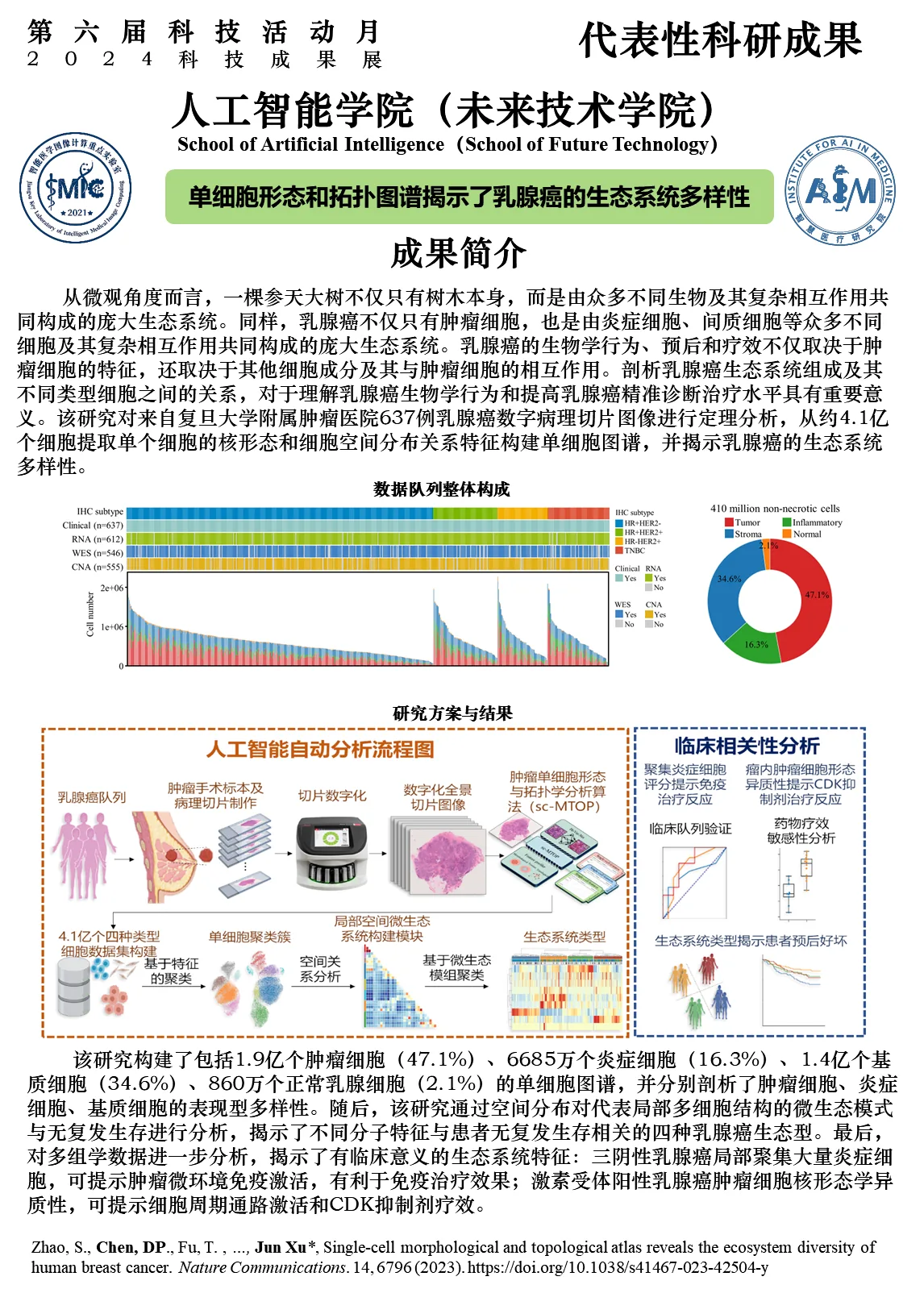
Single-cell morphology and topology maps reveal breast cancer ecosystem diversity
- IMIC Lab
- Research , Research results
- November 30, 2024
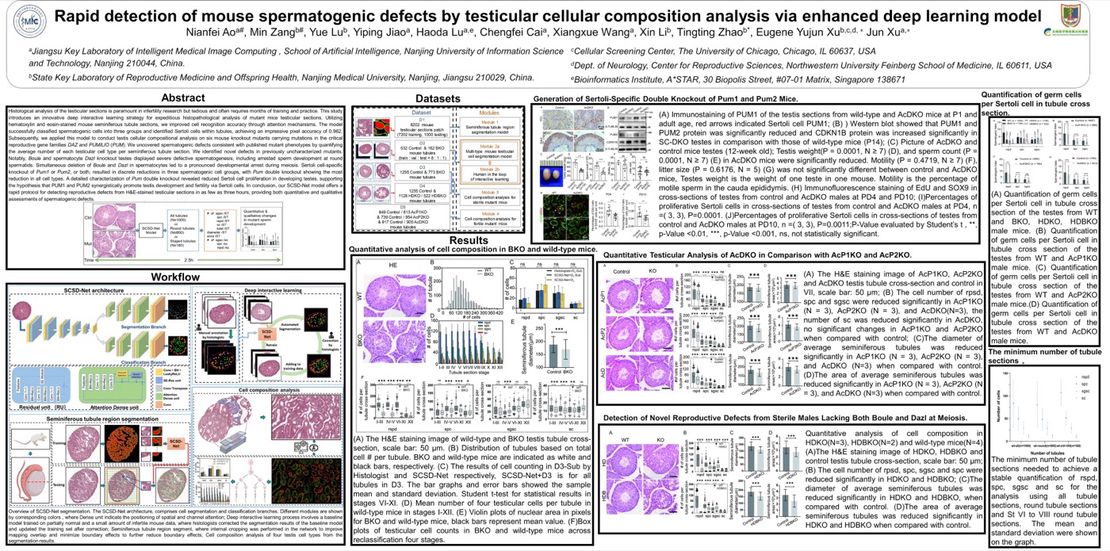
Professor Xu Jun’s team and Professor Xu Yujun’s team from the State Key Laboratory of Reproductive Medicine at the University of Chicago/Nanjing Medical University have pioneered the application of machine learning technology in the quantitative analysis of conventional H&E pathological sections of mouse testicles, and carried out automated staging and identification of spermatogenesis through quantitative analysis of histological sections of spermatogenesis. Recently, the collaborative team expanded this method to the rapid detection of spermatogenesis defects in male infertile mice. This collaborative work recently caused great repercussions at the 2024 Andrology Conference in the United States (see the picture below). At this meeting, participants from the field of reproductive medicine in the United States had extensive and in-depth interactions and exchanges with Professor Xu Yujun on issues related to the feasibility of using machine learning to identify mice containing fertility defect genes. This work was published in Andrology, the leading journal in the field of andrology.
Read More
Translated from the original Chinese source.
Read More
Translated from the original Chinese source.
Read More