Singapore A*STAR researcher Chen Zhenghua came to the school to give an academic report
- IMIC Lab
- Events , Academic report
- November 26, 2022
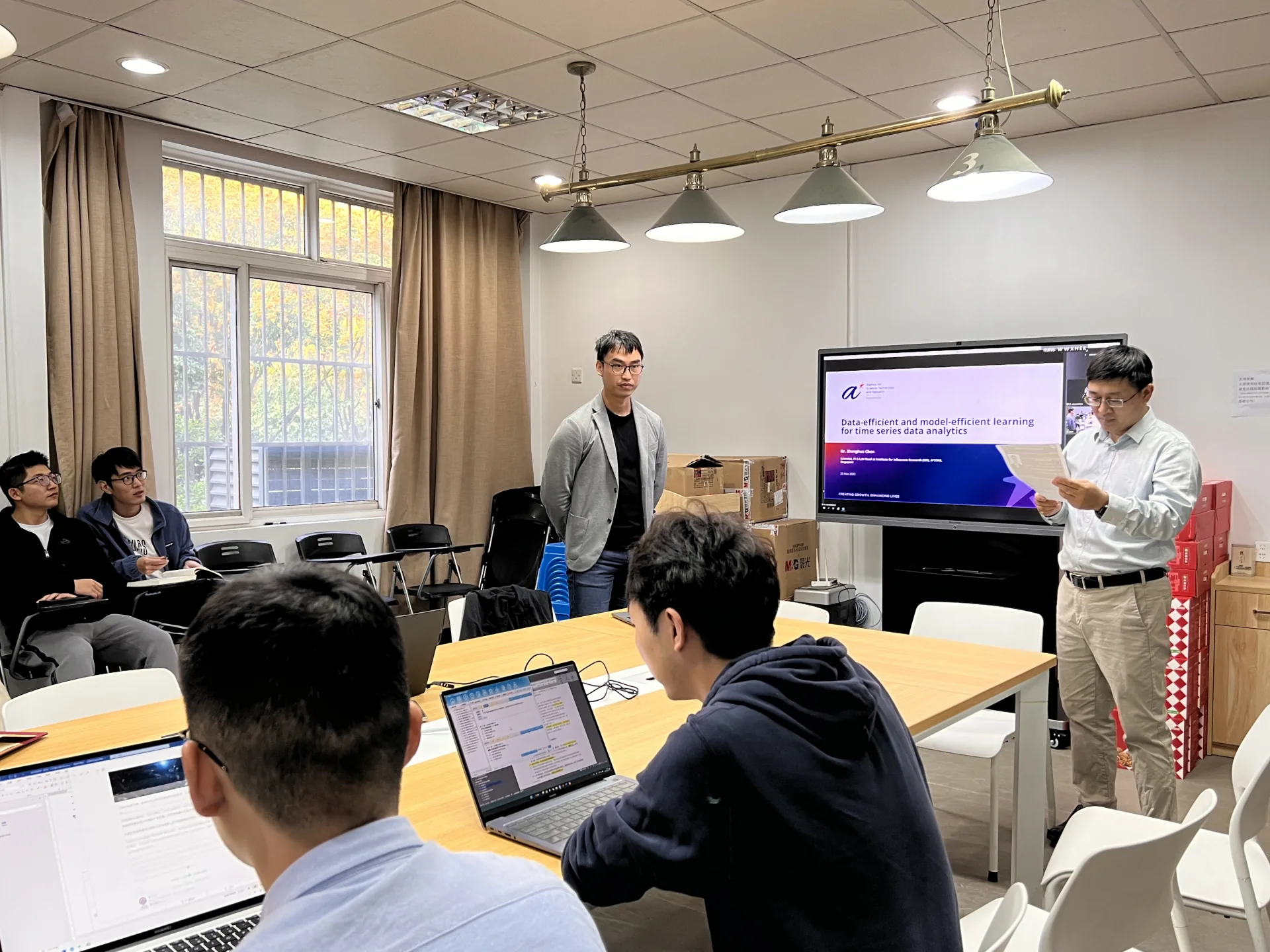
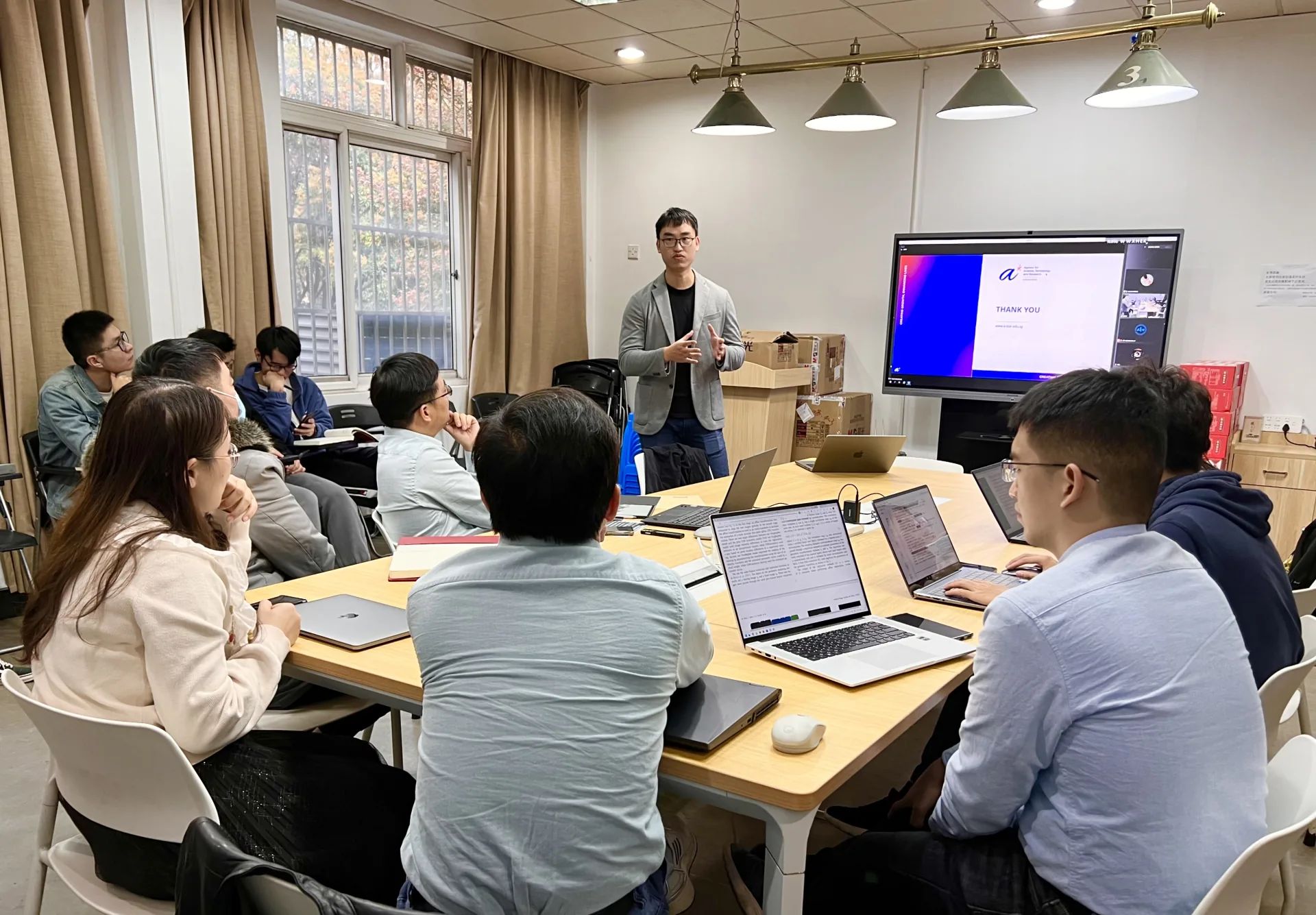
On the afternoon of November 25, Nanjing University of Information Science & Technology - Zhongda Hospital Smart Medical Research Institute invited researcher Chen Zhenghua from Singapore A*STAR to the school to give an academic report. The theme of the report was “Data-Efficient and Model-Efficient Learning for Time-series Data Analytics”. Professor Xu Jun, deputy dean of the School of Artificial Intelligence (College of Future Technology) and executive director of the Smart Medical Research Institute of our school, presided over this report meeting. There were more than 30 teachers, graduate students and undergraduates participating offline and online.
Dr. Chen Zhenghua’s report mainly introduced three time series data analysis technologies from the aspects of data efficiency and model efficiency: (1) self-supervised learning; (2) domain adaptation; and (3) knowledge distillation. Dr. Chen first introduced a self-supervised learning framework suitable for time series. Different from images and NLP, this self-supervised framework introduces time and context contrast and is more suitable for learning the representation of unlabeled time series data. Then, Dr. Chen introduced the research on domain adaptation of time series signals, and demonstrated the benchmark evaluation suite ADATIME developed by his team, which provides researchers with a fair and comprehensive method to evaluate the domain adaptation of different time series. Finally, Dr. Chen introduced a heterogeneous network compression method based on knowledge distillation, and elaborated and summarized the necessity and development trends of efficient models from the perspectives of algorithms and computational energy.
During the interactive session, participating teachers and students actively asked questions and had extensive and in-depth exchanges with Dr. Chen on issues such as complex control systems, big data computing and pattern recognition, software-hardware acceleration of deep learning models, and algorithm optimization. The academic atmosphere at the venue was strong.
Introduction to Dr. Chen Zhenghua:
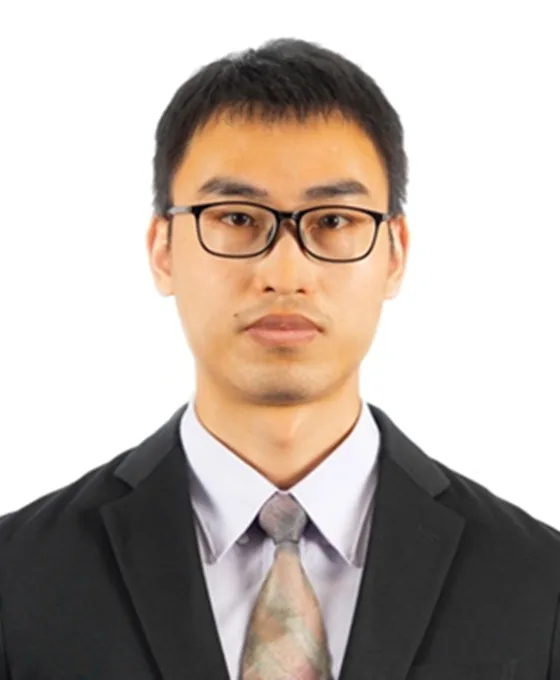
Dr. Chen Zhenghua received his bachelor’s and doctorate degrees from the University of Electronic Science and Technology of China and Nanyang Technological University, Singapore respectively. Currently serving as a research scientist, PI, laboratory director and doctoral supervisor at the Agency for Science, Technology and Research (ASTAR) in Singapore. The research field is small data and small model deep learning and its application in Internet of Things data analysis. In recent years, he has published more than 90 papers in top journals and conferences (including top journals IEEE TNNLS, Tcyber, TIE, TII and CCF Class A conferences AAAI, IJCAI, ICCV, NeurIPS, etc.), of which 5 papers were selected as ESI Highly Cited Papers, 1 paper was selected as ESI Hot Paper, and 1 paper was selected as one of the 100 Most Influential International Academic Papers in China; he wrote an English monograph (World) as the first author Scientific Publishing, available on Amazon); 5,000+ Google Scholar citations for papers; Hosted or co-hosted 10 Singapore National Research Foundation projects, with total project funding exceeding RMB 60 million; Invited to serve as deputy editor-in-chief of Neurocomputing and IEEE TIM, the journals of the second region of the Chinese Academy of Sciences, and IEEE JAS Youth Editorial Board of the journals of the first region of the Chinese Academy of Sciences; selected into the top 2% in the world for three consecutive years (2020, 2021 and 2022) Top scientist (published by Stanford University), has won the ASTAR Career Development Award, CCF Class A conference CVPR 2021 UG2+ Challenge Champion, IEEE Conference Best Paper Nomination Award, etc.; currently serves as the Vice Chairman of the Singapore Branch of the IEEE Sensor Society (chairman from 2023) and a senior member of IEEE.
Translated from the original Chinese source.