Professor Xu Jun visited the Singapore Science and Technology Agency and gave an academic report
- IMIC Lab
- Events , Academic report
- March 8, 2023
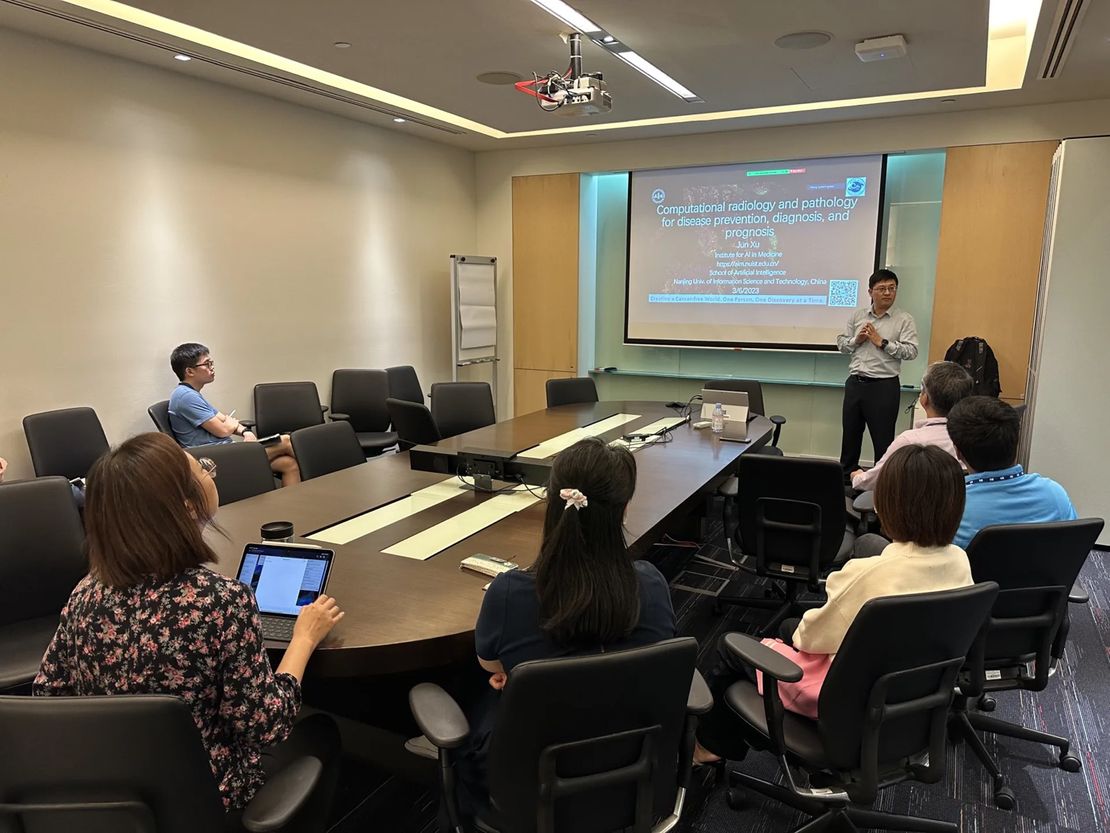
On the afternoon of March 6, 2023, at the invitation of Professor Yu Weimiao from the Institute of Bioinformatics of the Singapore Institute of Technology, Professor Xu Jun, Executive Director of the Smart Medical Research Institute, visited the Institute of Bioinformatics and was invited to give an academic report titled “Computational radiology and pathology for disease prevention, diagnosis, and prognosis” at the Institute of Bioinformatics.
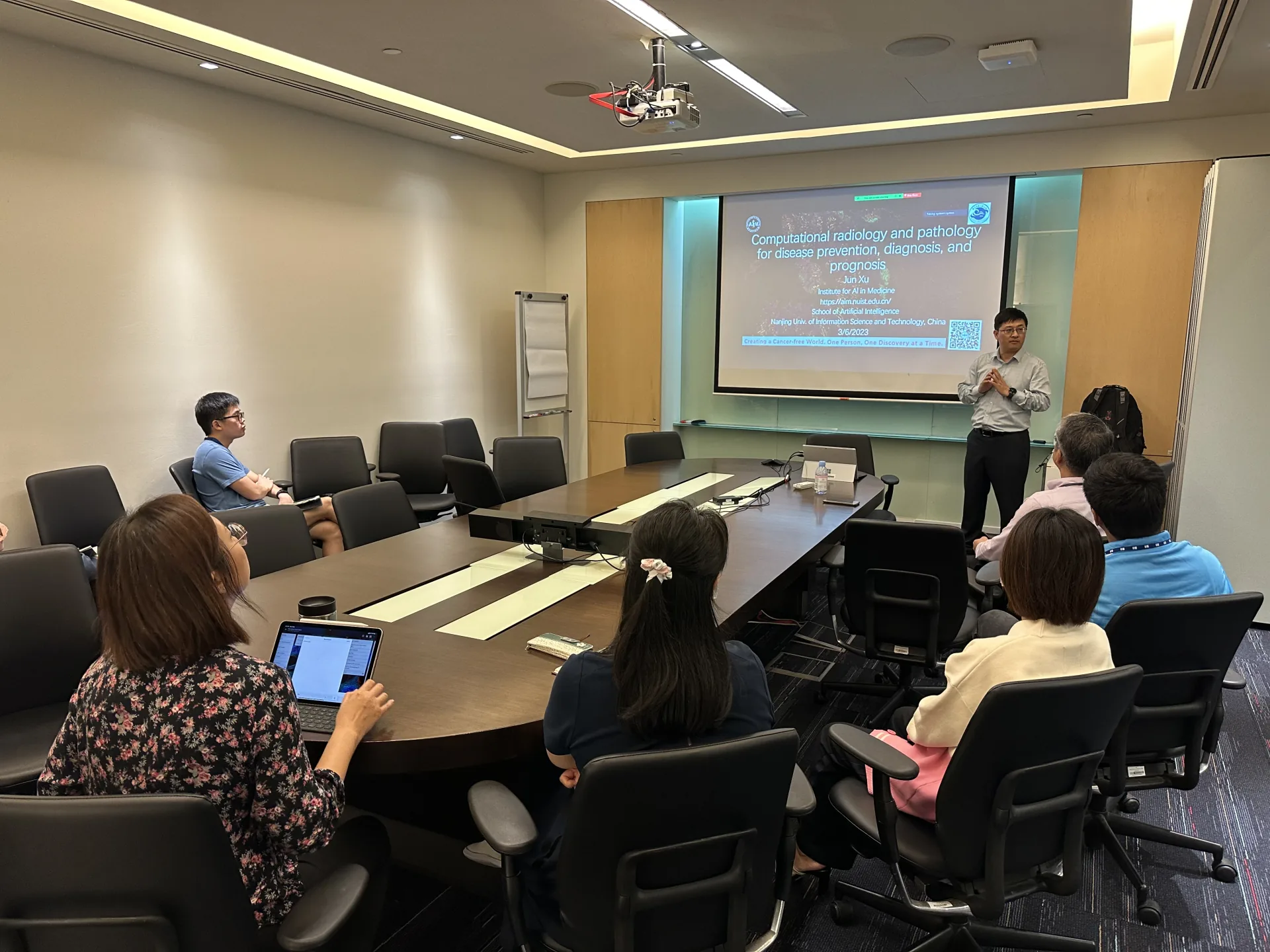
The report mainly focuses on the discussion of related research results being carried out by the Smart Medical Research Institute on machine learning-driven radiology and histology image analysis and multi-modal and multi-scale data fusion of imaging and histopathology. Radiographic imaging and conventional histopathological section images contain a lot of valuable information for clinical diagnosis, treatment, and prognosis. With the rapid development of advanced medical image analysis and high-resolution digital pathology scanning and imaging technology, we can more easily obtain multi-scale image biomarker descriptions of diseases from radiological imaging and conventional histopathology images, such as millimeter-scale and micron-scale image phenotype descriptions, many of which are image patterns that are indistinguishable to the human eye. By quantitatively obtaining image patterns and phenotypic descriptions of these diseases, we can build models to assist doctors in detecting and diagnosing the disease more accurately, and try to assess or predict the risk of disease recurrence, disease aggressiveness, long-term survival, and patient response to treatment. For more than 10 years, the Smart Medical Research Institute team has been committed to the research and development of machine learning-driven radiological imaging and histological image analysis tools. By building an “image biomarker” model based on radiological imaging and histological images, it is expected that in the future it can better assist doctors in preventing, diagnosing and predicting disease progression as well as patient response to treatment.
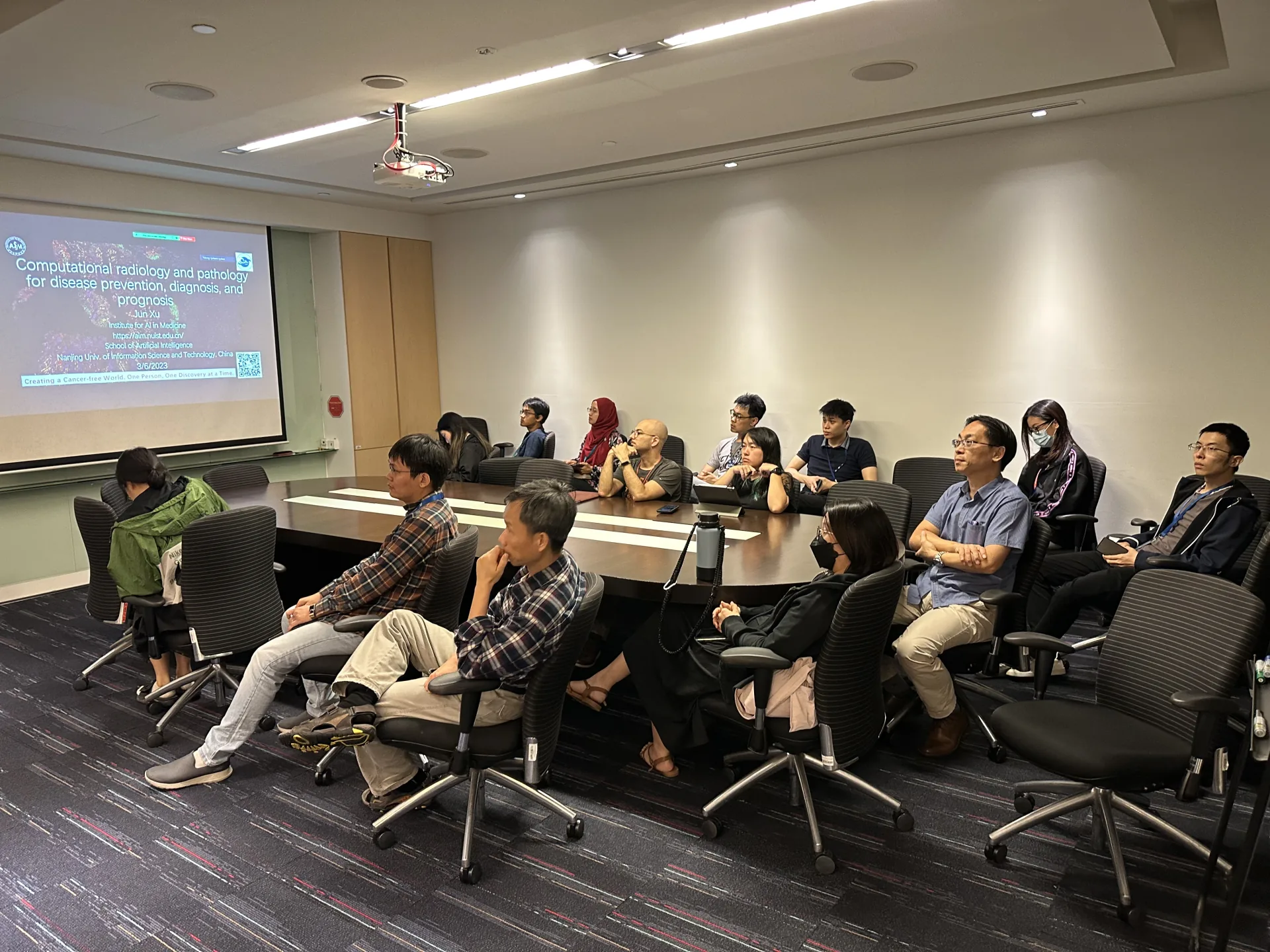
In the report, Xu Jun introduced the relevant research results recently published by the institute, which mainly include: 1) prediction of microvascular infiltration of hepatocellular carcinoma based on liver CT radiomics model, 2) computer-aided diagnosis of chronic myelogenous leukemia, 3) quantitative analysis of tumor microenvironment and survival prediction of cholangiocarcinoma patients, 4) prediction of response to immunotherapy in patients with non-small cell lung cancer, 5) triple-negative breast cancer subtype classification and prognosis analysis based on quantitative analysis of breast histology images, and 6) Staging and cell composition analysis of mouse seminiferous tubules. Finally, Xu Jun also introduced the medical team and research fields of the Smart Medical Research Institute.
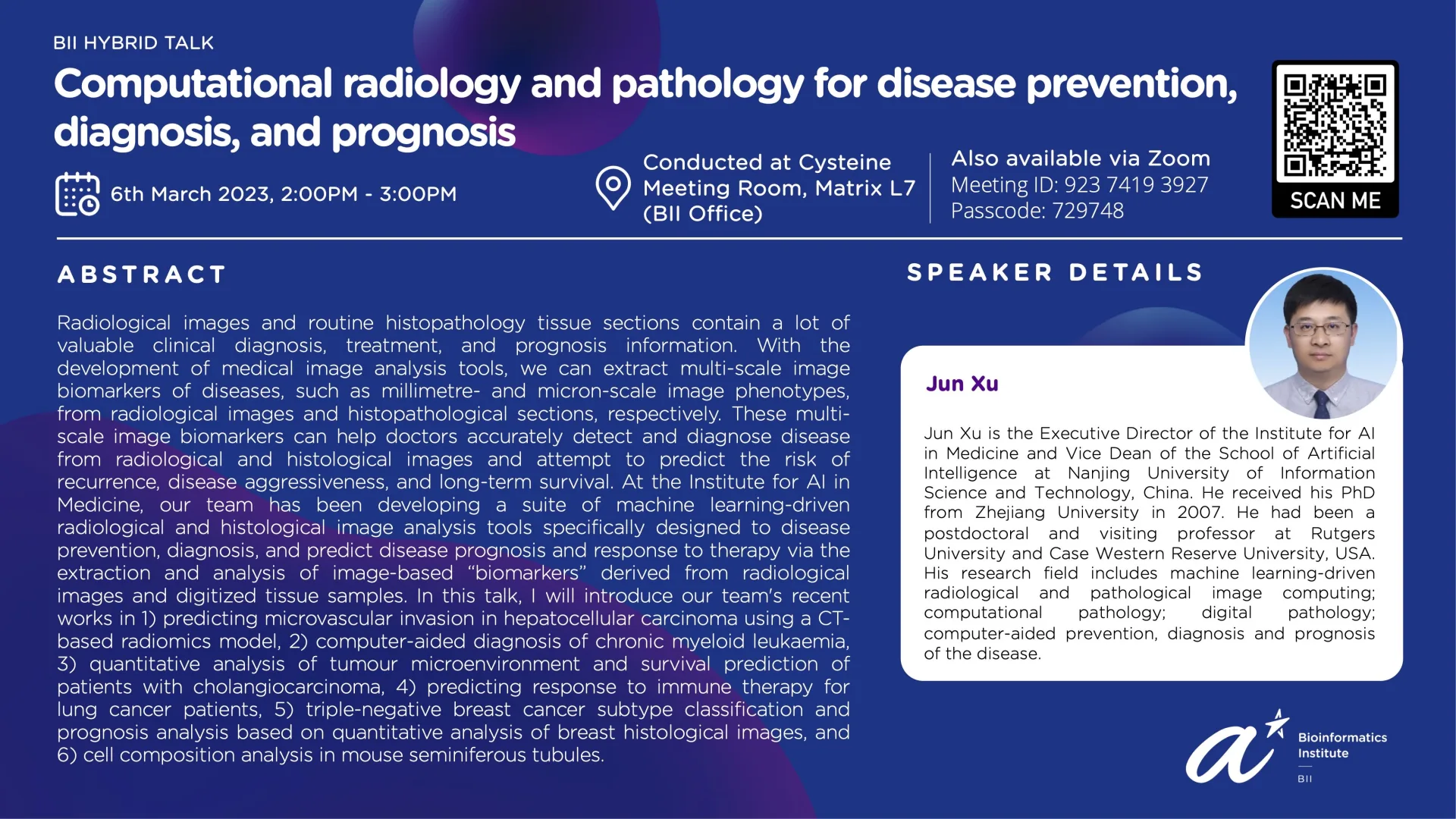
This academic report was hosted by Professor Yu Weimiao from the Institute of Bioinformatics of the Singapore Institute of Science and Technology. It aimed to focus on areas of interest to both parties, further strengthen mutual understanding between teachers and students of the two units, and in-depth cooperation and exchanges. During the Q&A and interactive session, the participants had extensive and in-depth discussions and exchanges with Xu Jun. Finally, Professor Kwee Kuan from the Institute of Bioinformatics summarized the report. In addition to researchers from the Singapore Science and Technology Agency, participants in this academic report also include researchers from the world’s leading pharmaceutical companies such as BGI and Merck. The report adopted a mixed offline and online approach, with more than 40 offline participants and more than 30 online participants.
The Smart Medical Research Institute and the Institute of Bioinformatics of the Singapore Science and Technology Agency have cooperated for many years in talent training and scientific research. Currently, many high-level papers have been jointly published in areas such as computational pathology, intelligent automatic Gleason grading of prostate cancer, and automatic staging of mouse seminiferous ducts. This report is also the first face-to-face communication between the Chinese and New Zealand teams after the epidemic. The two parties plan to further strengthen cooperation in joint applications for scientific research projects, teacher exchanges and cooperation, and the training of high-level talents such as masters and doctoral students.
Further reading
The Agency for Science, Technology and Research (abbreviated as ASTAR) is an autonomous research agency under the Ministry of Trade and Industry of Singapore. Its predecessor was the Science and Technology Agency of Singapore established in 1991. The goal of ASTAR is to promote the integration of scientific research and talent in Singapore to assist Singapore in its transformation and advancement into a knowledge-based economy. Its affiliated research institutes are divided into two branches: biomedical research and scientific engineering research, each of which leads a number of affiliated research institutes to carry out scientific research in related fields. It also directly governs the Interdisciplinary Integration Council, the Graduate School, Sutron Technology Pte Ltd, and the Corporate Public Affairs Service Department to achieve resource sharing among various institutes. ASTAR is an important catalyst, promoter and convener of the Singapore research community. Through open innovation, ASTAR collaborates with public and private sector partners and uses science and technology to benefit the economy and society. The Bioinformatics Institute (BII) is affiliated to the ASTAR Biomedical Research Council and was established in July 2001. Located in Biopolis Street, Singapore, BII is ASTAR’s computational biology research institution and the National Bioinformatics Resource Center. BII aims to understand the biomolecular mechanisms behind biomedical phenomena by developing artificial intelligence/machine learning analysis methods. BII extensively analyzes biological and clinical data, including omics data (biomolecule sequences, expression profiles, epigenetic data), and 3D structures of macromolecules. BII’s applied research involves infectious diseases, computational pathology, natural product research, precision medicine, cancer research and drug discovery.
Translated from the original Chinese source.