Professor Yu Weimiao from the Singapore Agency for Science and Technology (A*STAR) was specially invited to the school to give an academic report.
- IMIC Lab
- News , Comprehensive news
- April 22, 2023
On the afternoon of April 10, Nanjing University of Information Science & Technology - Zhongda Hospital Smart Medical Research Institute invited Professor Yu Weimiao from the Singapore Science and Technology Agency (A*STAR) to the school to give an academic report. The report was titled “Five Necessary Steps from Traditional Pathology to AI-driven Digital Pathology Diagnosis”. Professor Xu Jun, deputy dean of the School of Artificial Intelligence (School of Future Technology) and executive director of the Smart Medical Research Institute of our school, presided over this report meeting. The meeting adopted a combination of offline + online (Tencent Conference and Kouxiang Academic). There were more than 60 teachers and students participating in the Tencent Conference online and offline, and the Kouxiang Live Broadcast Platform received about 2,000 clicks from the audience.
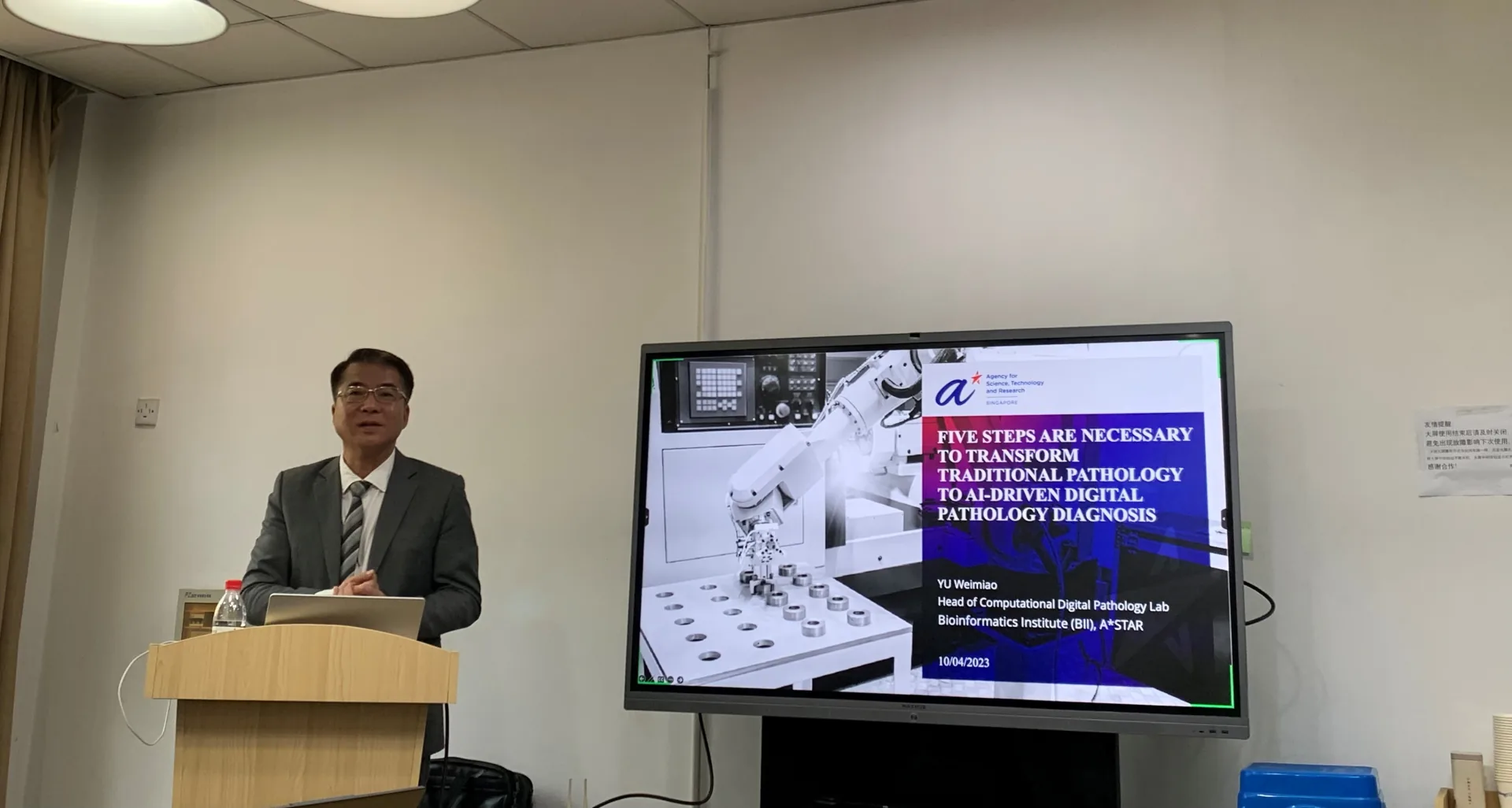
Dr. Yu Weimiao’s report mainly focused on how to successfully deploy pathological diagnosis based on artificial intelligence in clinical practice. Dr. Yu’s report first reviewed the current development status of the field of pathological diagnosis based on artificial intelligence, and analyzed the difficulties, challenges and bottlenecks currently faced in this field, including technical and non-technical considerations. In response to these bottlenecks and challenges, the five necessary steps required to accelerate the development of AI pathological diagnosis models for clinical application were discussed and summarized, including image quality plan-standard, data calibration plan-standard, training data plan, model training and optimization plan, verification practical and model iteration plan. Dr. Yu introduced in detail the substantial research work his team has done in these five areas, including the development of a number of key solutions missing in the existing ecosystem, such as digital pathology quality management systems, cloud-based structured parallel calibration systems, pathological diagnosis solution optimization and verification solutions, and promoting the establishment of Singapore’s standardized digital pathology calibration database.
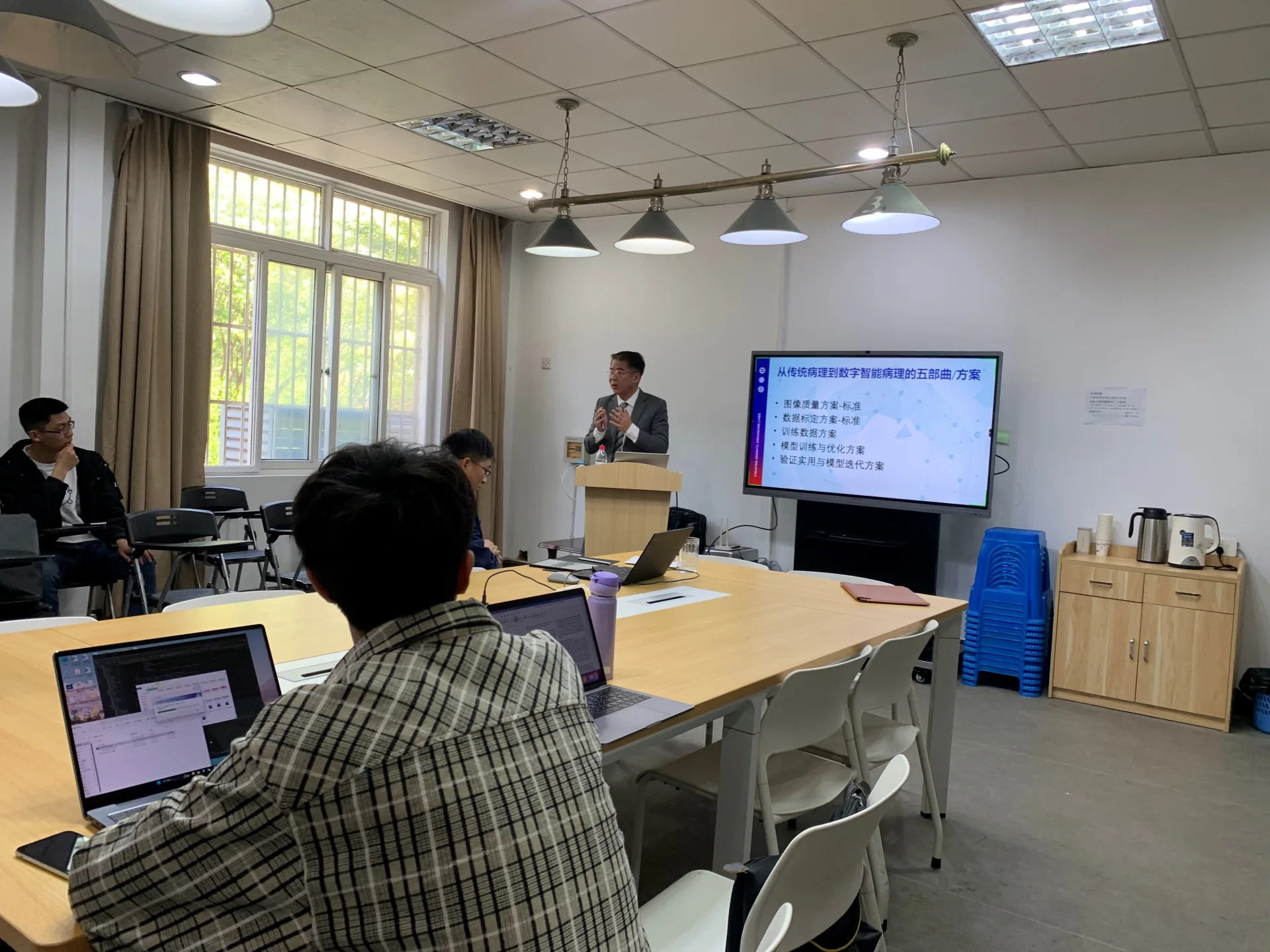
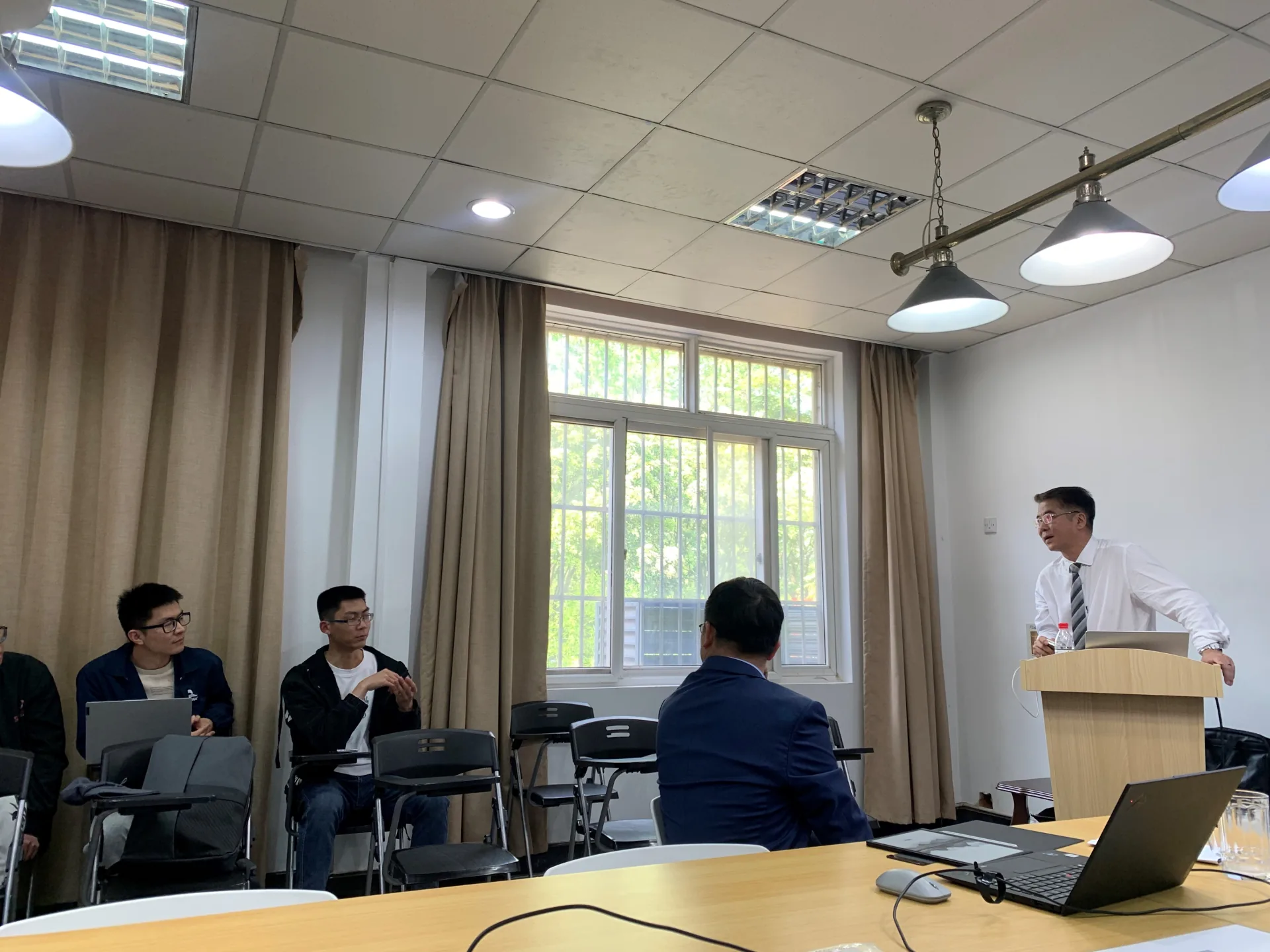
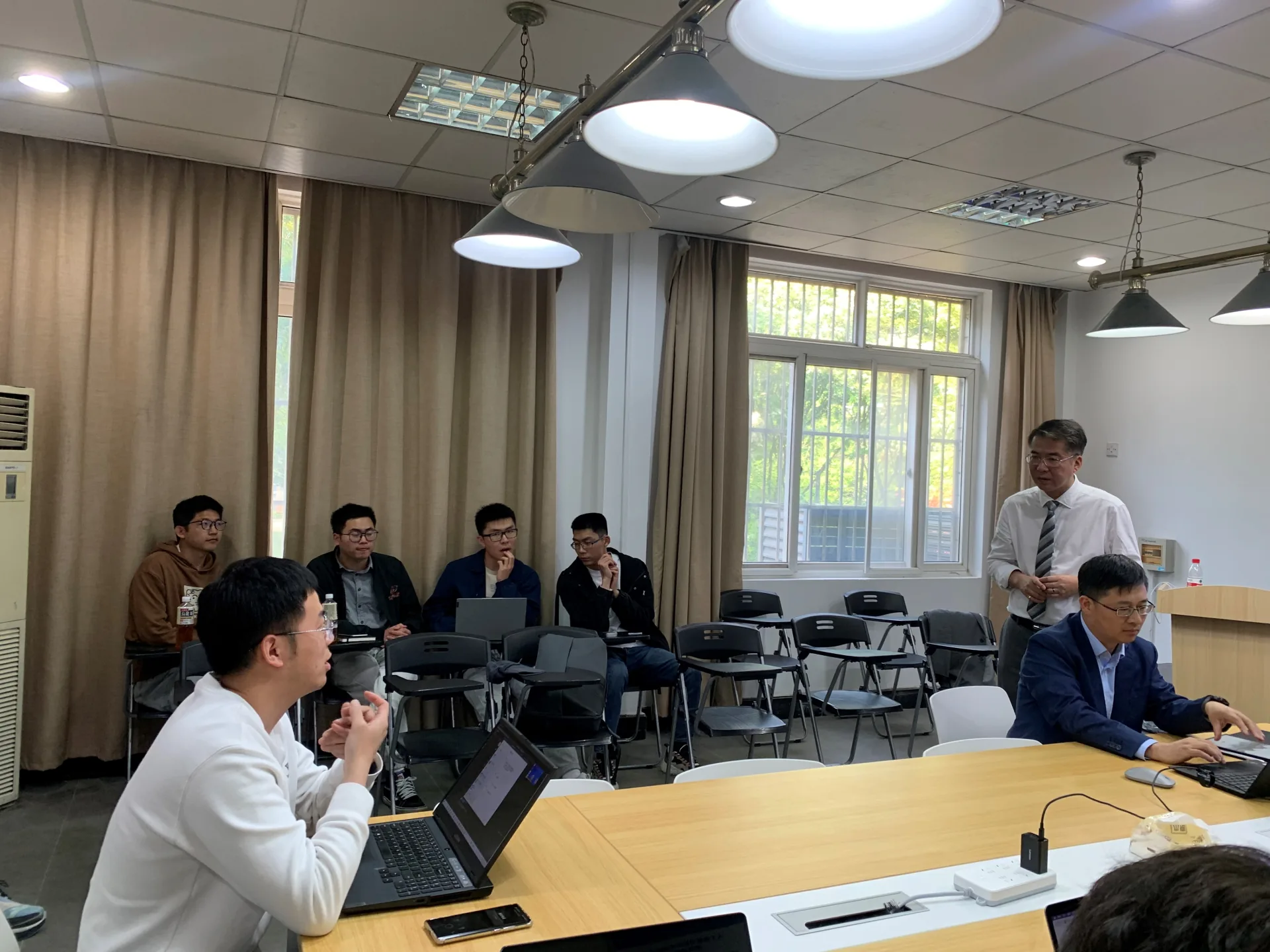
During the report period, the academic atmosphere was strong. Teachers and students participating in the offline meeting enthusiastically asked questions. Dr. Yu gave detailed answers to the questions one by one. At the same time, they had extensive and in-depth interactions and exchanges with Dr. Yu on related issues in the fields of pathological image quality control, pathological image standardization construction, etc.
Introduction to Dr. Yu Weimiao:
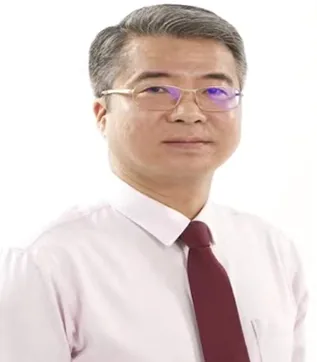
Dr. Yu Weimiao received his PhD from the National University of Singapore (NUS) in 2007, majoring in image processing and machine vision. He joined the Agency for Science, Technology and Research (A*STAR) in Singapore in 2007 and the Institute of Molecular and Cellular Biology (IMCB) in 2010. He currently leads the Computational Digital Pathology Laboratory (CDPL) of the Bioinformatics Institute (BII) and the Computational Molecular and Pathology Laboratory (CMPL) of IMCB, aiming to deepen and expand research and clinical research. Research and development of beds and industrial partners. His research interests are computational biomedical image analysis and quantitative image informatics in biomedical images. Dr. Yu’s research results have been published in top international peer-reviewed journals, such as Nature Cell Biology, Nature Communications, and Current Biology. His previous research results have been successfully commercialized and have impacted diagnostics and drug discovery. In order to strengthen the application of machine learning and artificial intelligence in clinical diagnosis/prognosis, he established a biotechnology company called A!maginostic Pte. Ltd. in Singapore. He established a world-class tissue-level immune diagnostic platform. The platform allows researchers, clinicians and pharmaceutical companies to analyze patients’ immune signatures for diagnosis, prognosis and drug response studies.
Introduction to Smart Medical Research Institute
Nanjing University of Information Science & Technology-Smart Medical Research Institute is headed by Professor Teng Gaojun, an academician of the Chinese Academy of Sciences, as the dean, and Professor Xu Jun as the executive dean. The institute aims at new concepts, new technologies, and new methods in the field of smart medical care, aiming to create a first-class domestic and internationally renowned cutting-edge and medical-engineering cross-research platform.
The philosophy of the institute is: Originating from clinical practice, superior to clinical practice, empowering clinical practice, and returning to clinical practice. First of all, the problems studied by the research team at the intersection of medicine and engineering originate from clinical practice and are committed to condensing and exploring and solving major scientific issues in the cutting-edge fields of medicine and health disciplines. By publishing influential academic papers, we hope to lead and promote the development of certain cutting-edge fields. Secondly, we are committed to promoting the implementation and transformation of research results in the field of smart medical care, so that the research results can truly serve the clinic, actually solve clinical problems, and benefit patients.
The institute is supported by the intersection of medical and engineering disciplines, promoting the in-depth integration and intersection of artificial intelligence, big data, robots, electronic information, automation, computers and other information engineering and medical fields, and promoting Medical artificial intelligence technology innovation and achievement transformation. The research institute actively explores the long-term mechanism of “organic combination of scientific research and teaching, mutual promotion of innovation and application, and coordinated development of universities and hospitals”, through the construction of platforms between schools and colleges, scientific research cooperation, and achievements. We should work closely together to achieve fruit transformation and other fields, promote the in-depth integration of innovative resources, accelerate the development of new engineering and new medical sciences, and cultivate compound and innovative talents with a combination of science, engineering, and medicine.
The institute has a strong faculty, including more than 20 senior medical experts including Academician Teng Gaojun, and 13 engineering experts such as Professor Xu Jun. Relying on the School of Artificial Intelligence (College of Future Technology) of Nanjing University of Information Science & Technology, the average age of engineering experts in the institute is 31 years old, 3 have senior professional titles, 1 is a national-level talent, and 4 are provincial-level talents. , 100% have overseas study experience, 62% have obtained a doctorate degree overseas, and more than 90% have obtained a doctorate degree from the top 200 QS universities in China, the United States, the United Kingdom, etc., yes A team with high level, good international vision, diverse and diverse sources, young and energetic team. The institute is looking for long-term and long-term recruitment of high-level talents from all over the world. Welcome to recommend outstanding talents to join us!
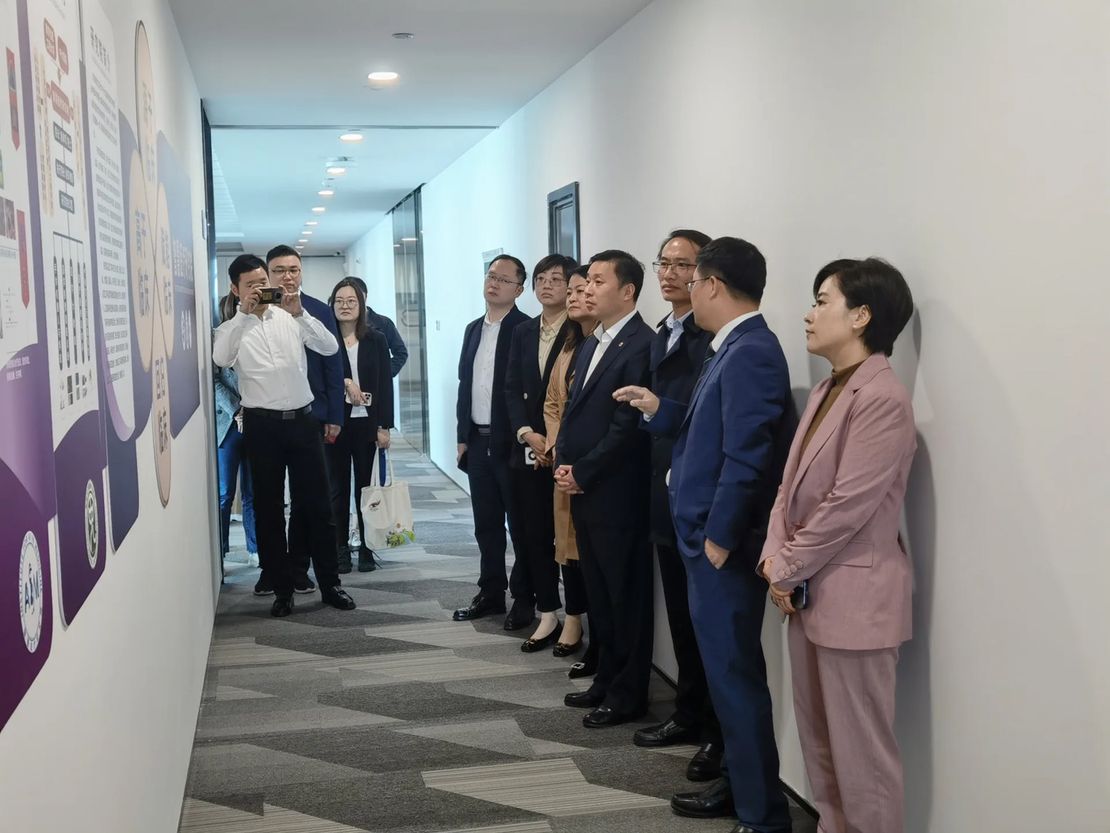
Nanjing University of Information Science & Technology-Zhongda Hospital Smart Medical Research Institute has good office conditions and facilities. The newly purchased hardware equipment of the institute includes: a Leica high-throughput slide scanner GT450, and a high-performance computing cluster (including a management server, 2PB storage server, 5 GPU nodes, and 5 multi-core large memory computing nodes).
Translated from the original Chinese source.