The School of Artificial Intelligence (College of Future Technology) held a study abroad application exchange meeting
- IMIC Lab
- News , Comprehensive news
- June 28, 2023
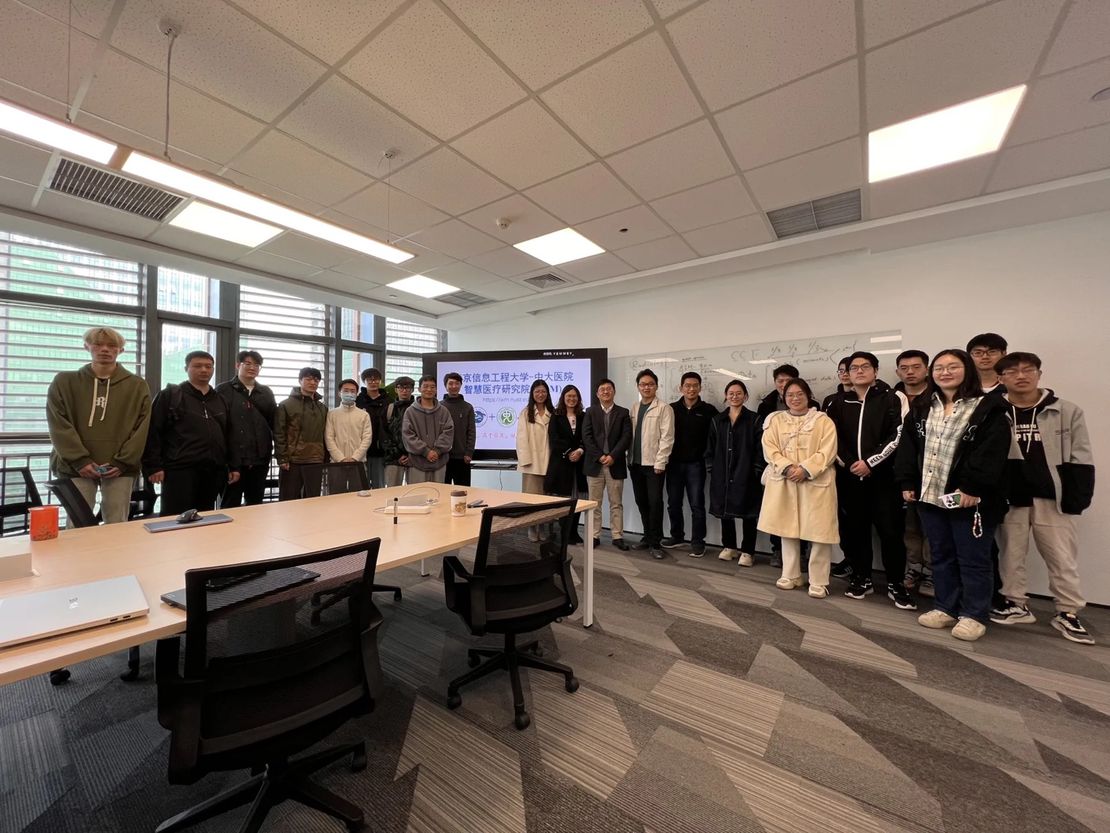
On June 26, the School of Artificial Intelligence (College of Future Technology) held a study abroad application exchange meeting in A101-102 of the Information Technology Building. Three junior students, Xu Geyang, Pang Yuqi, and Liu Jiehui, who studied at several well-known universities in the United States, were invited to share their experiences in studying professional courses such as informatics, statistics, and data science in American universities. Young teachers from the college and more than 30 junior students participated in the event. The meeting was chaired by Dr. Li Jin.
Three students, Xu Geyang, Pang Yuqi and Liu Jiehuo, shared their views on the characteristics of the school, departmental settings, curriculum, on-campus community organizations and extracurricular life. Xu Geyang from the University of Washington in the United States introduced in detail the academic content of her School of Information (iSchool) and the development branch of Biomedical & Health Informatics (Biomedical & Health Informatics), her main major in informatics; Pang Yuqi from the University of Virginia in the United States introduced the curriculum of the statistics major she is studying and other related content. Liu Jiehe, a student from the University of California, San Diego, mainly exchanged views on the design of data science professional courses and the arrangement of advanced courses. Through exchanges, the participating students gained a deeper understanding of study and life in foreign universities.
Afterwards, everyone visited the Smart Medical Research Institute of Nanjing University of Science and Technology-CUHK Hospital. First, Professor Xu Jun, deputy dean of the college and executive director of the Smart Medical Research Institute, gave a detailed introduction to the relevant information and research fields of the Smart Medical Research Institute. He introduced the current four research areas that the Smart Medical Research Institute is focusing on: pathological artificial intelligence-assisted diagnosis, treatment and prognosis, medical imaging and analysis, brain science and neuroimaging, and multi-omics and medical big data analysis. Next, young teachers with overseas study experience provided guidance on overseas study applications that the participating students were concerned about. Dr. Luo Yuemei, who graduated from Nanyang Technological University in Singapore, focused on introducing to the students the matters needing attention in applying for postgraduate studies at Nanyang Technological University and the development of scientific research work; Dr. Gan Xiao, who graduated from Pennsylvania State University in the United States, shared his experience in applying for a master’s and doctoral program in the United States and matters related to postgraduate studies in the United States. Dr. Li Jin went to Oxford University for joint training during her doctoral studies at Zhejiang University. She introduced the situation of Oxford University to the students, her extracurricular life during her studies at Oxford University, and the local customs, which benefited the students a lot.
Through this exchange, students in our school have a deeper understanding of study and life in foreign universities, and a more specific and clear understanding of how to prepare for postgraduate applications to foreign universities. Finally, Professor Xu Jun led the students to visit and introduce the China Interventional and Multidisciplinary Liver Cancer Alliance (CHANGE) of the Smart Medical Research Institute, the China Liver and Portal Hypertension Alliance (CHESS), and surgical and interventional robots.
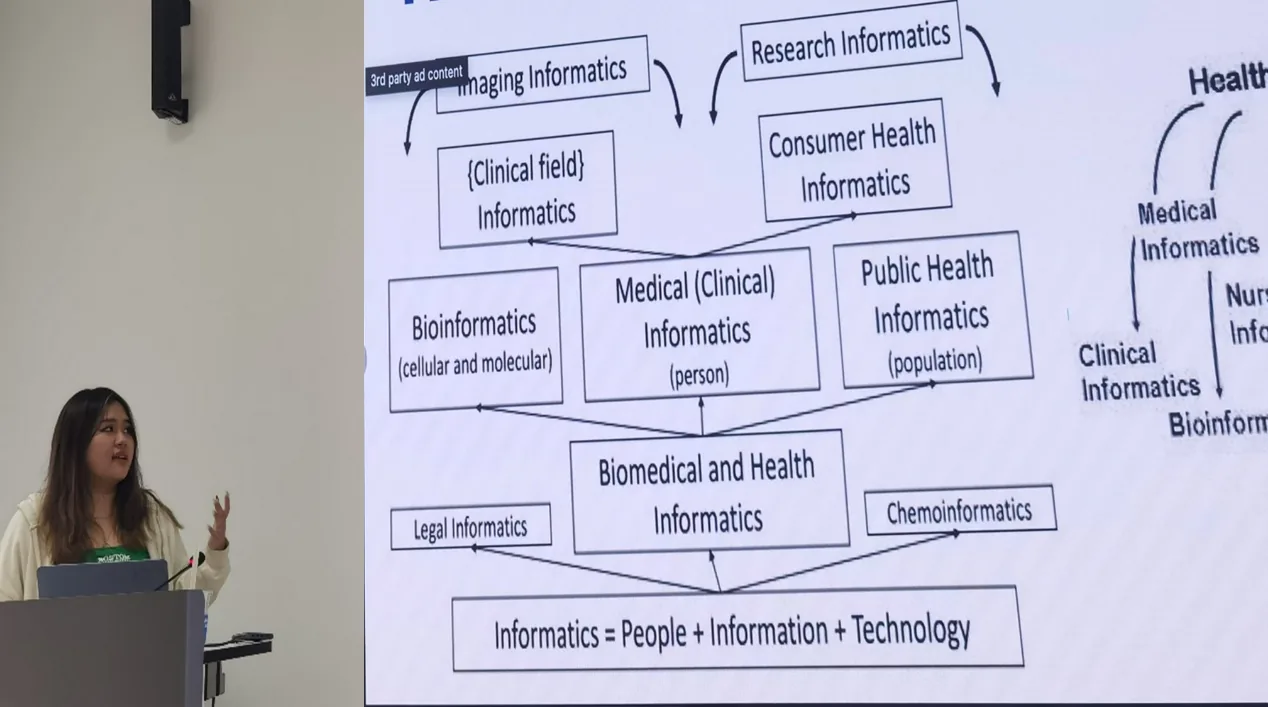
Xu Geyang introduces the main direction of studying informatics at the University of Washington in the United States
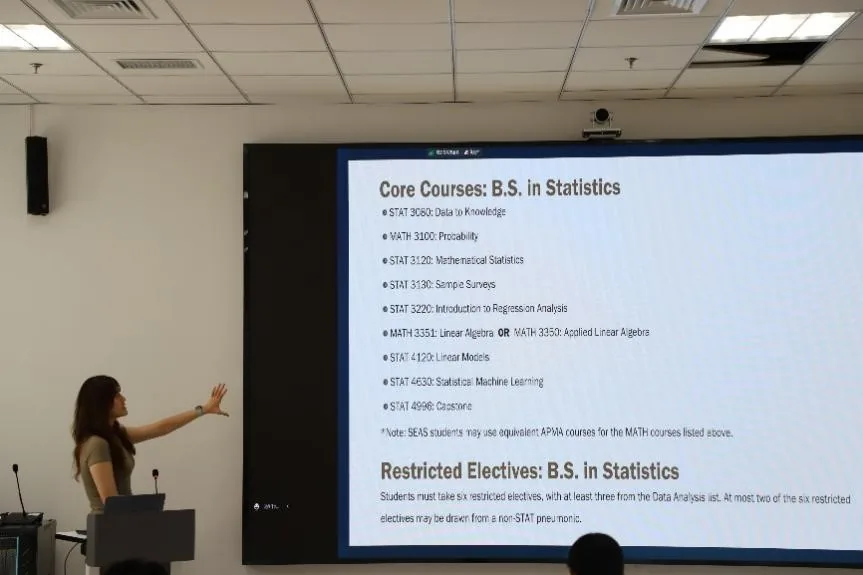
Pang Yuqi introduces the curriculum of statistics major at the University of Virginia in the United States
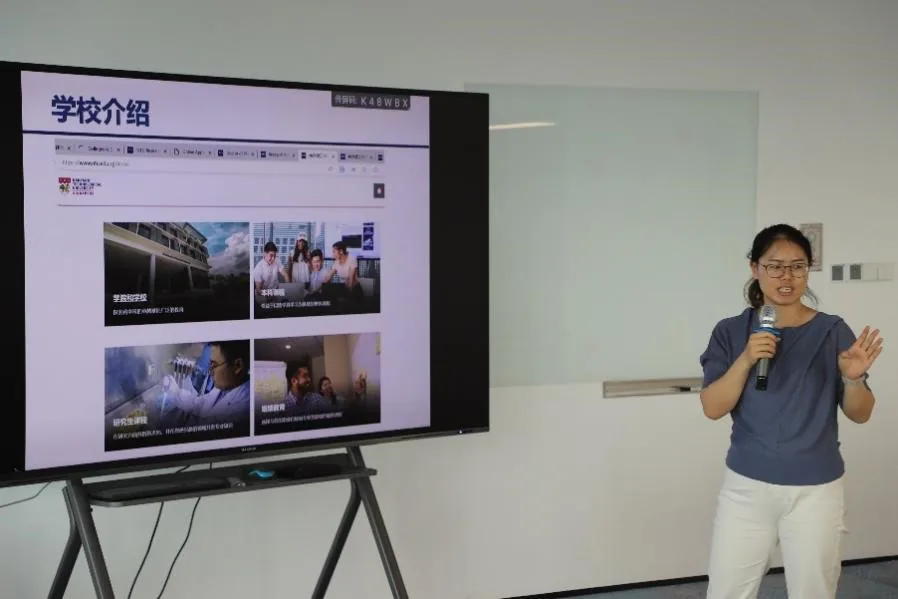
Teacher Luo Yuemei introduced the situation of Nanyang Technological University in Singapore and the precautions for applying for graduate students in the school
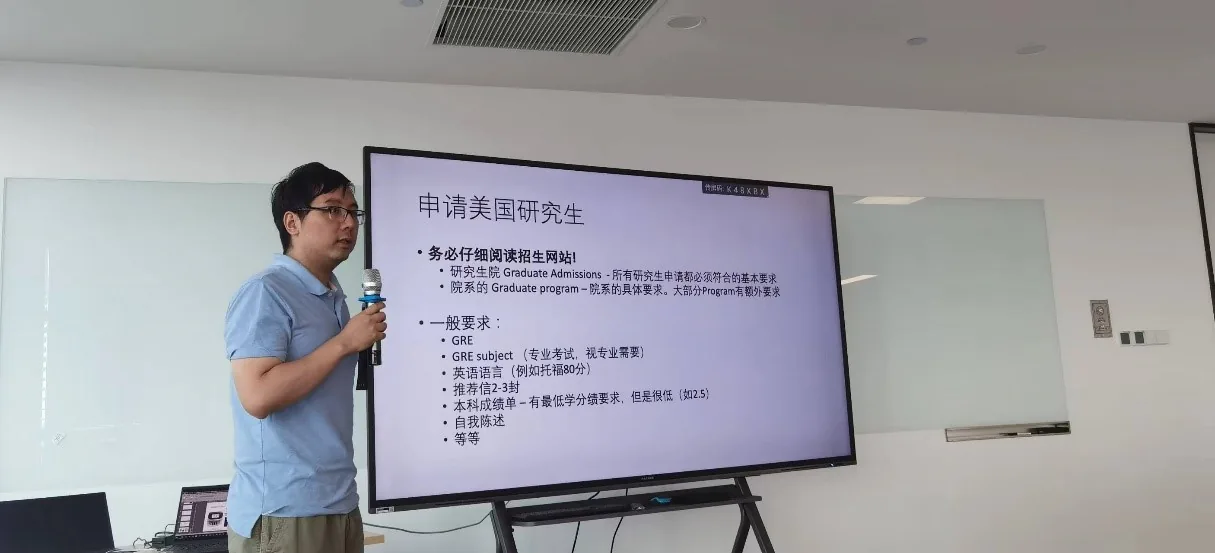
Teacher Gan Xiao introduces things to note when applying for graduate school in the United States
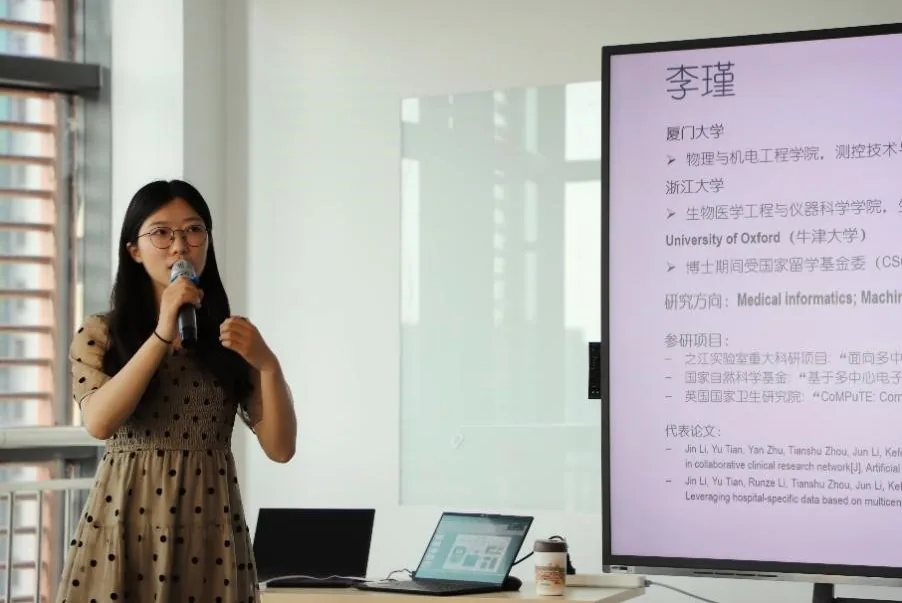
Teacher Li Jin introduced the situation of Oxford University in the UK and the precautions for applying for postgraduate students at the school
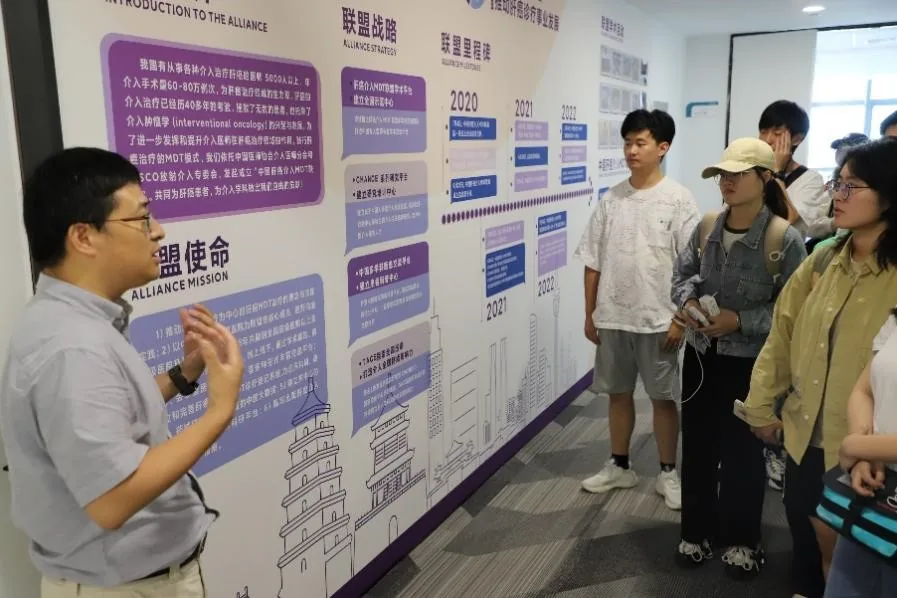
Professor Xu Jun introduces the research platforms related to the Smart Medical Research Institute
Translated from the original Chinese source.