Professor Liu Linbo from Nanyang Technological University in Singapore was specially invited to the school to give an academic report.
- IMIC Lab
- News , Comprehensive news
- March 13, 2023
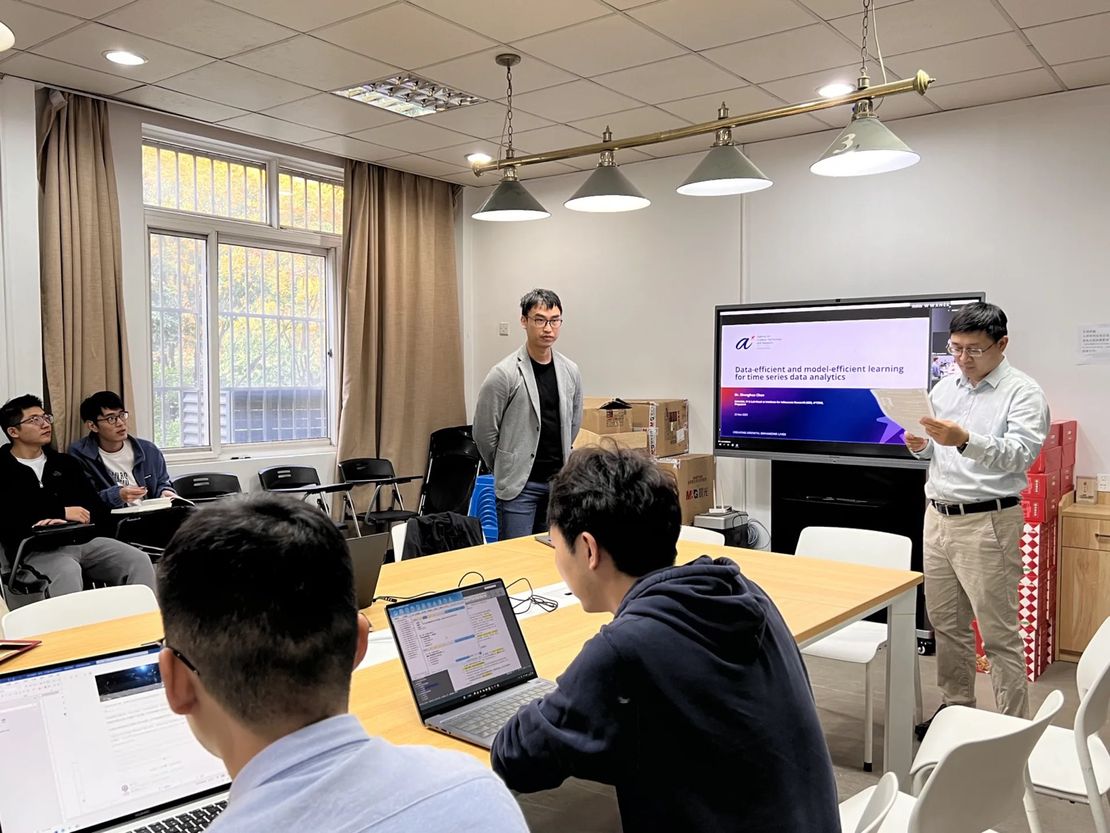
On the afternoon of March 3, Nanjing University of Information Science & Technology - Zhongda Hospital Smart Medical Research Institute invited Professor Liu Linbo from Nanyang Technological University in Singapore to give an academic report. The report was titled “Micrometer Resolution OCT Technology and Application”. Professor Xu Jun, deputy dean of the School of Artificial Intelligence (College of Future Technology) and executive director of the Smart Medical Research Institute of our school, presided over this report meeting. The meeting was a combination of offline + online (Tencent Conference and Koxiang Academic). There were more than 40 teachers and students participating in the meeting.
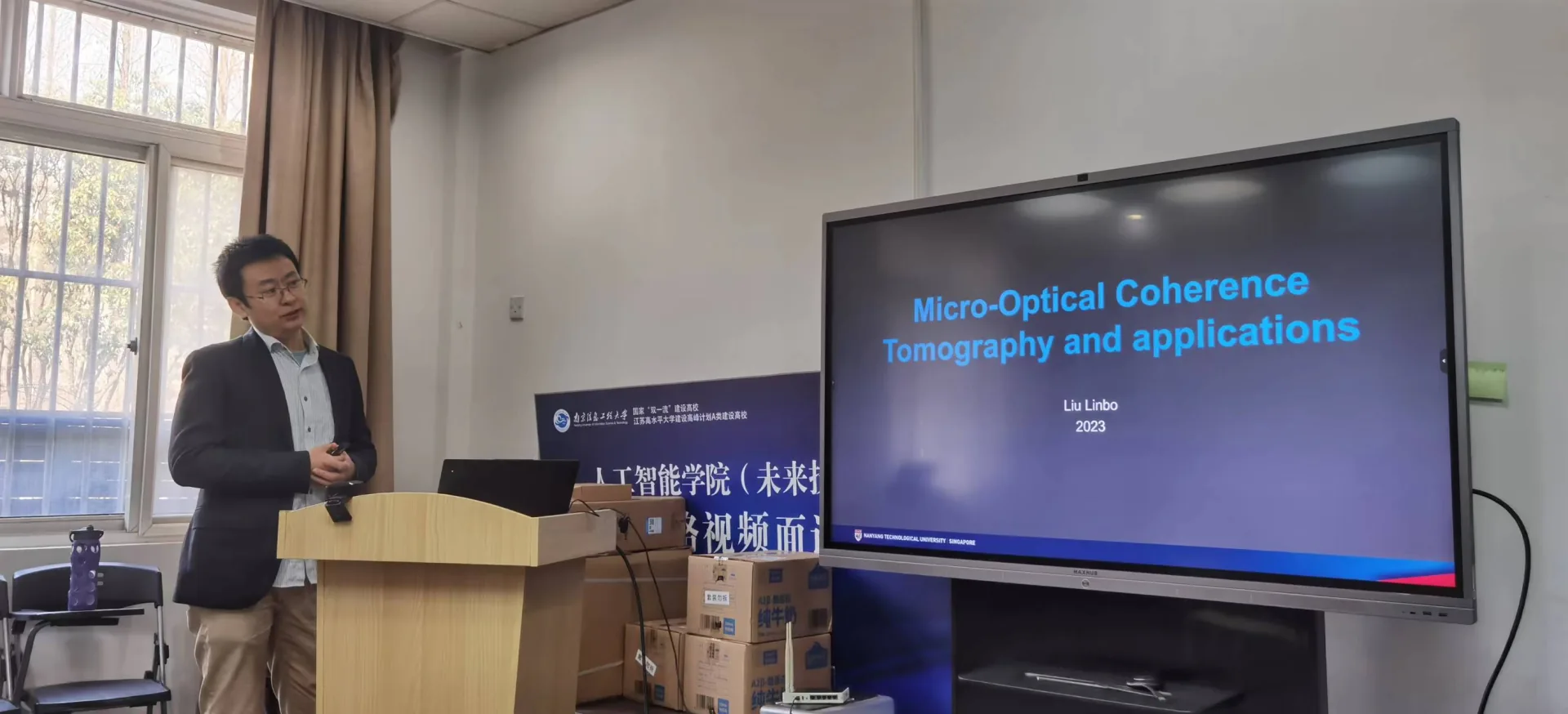
Professor Liu Linbo’s report is mainly divided into the following three aspects: (1) Introduction and application scenarios of Optical Coherence Tomography (OCT); (2) Bottlenecks in the application of existing OCT technology and innovations in micron resolution OCT (Micro-OCT); (3) Team-related experimental work.
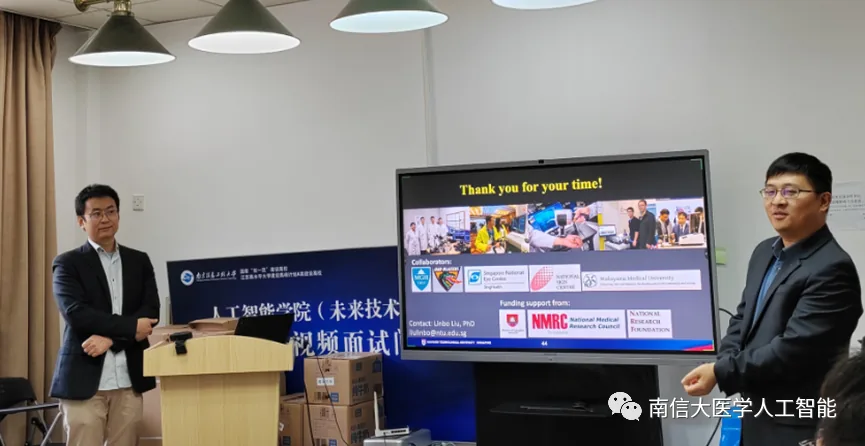
First of all, Professor Liu introduced the advantages of OCT examination, that is, it is different from invasive pathological examination. It is a non-destructive, non-radiation, non-contact tomographic imaging technology, which is more easily accepted by patients. Moreover, OCT can provide micron-level spatial resolution and millimeter-level penetration depth, which is very suitable for high-speed and large-scale imaging of human mucosal layers, so it is widely used in the clinical diagnosis of mucosal diseases. Next, Professor Liu analyzed the bottlenecks in the application of existing OCT technology. One of them is its limited spatial resolution (5-10 microns), which cannot clearly distinguish most human cells and subcellular structures (1-2 microns). The Micro-OCT studied by Professor Liu’s team is an OCT technology with a resolution of 1 micron. This technology can achieve axial resolution of 1 micron by using methods such as interference spectrum splicing. At the same time, it improves lateral resolution and extended depth of focus through multi-aperture synthesis and digital refocusing technology.
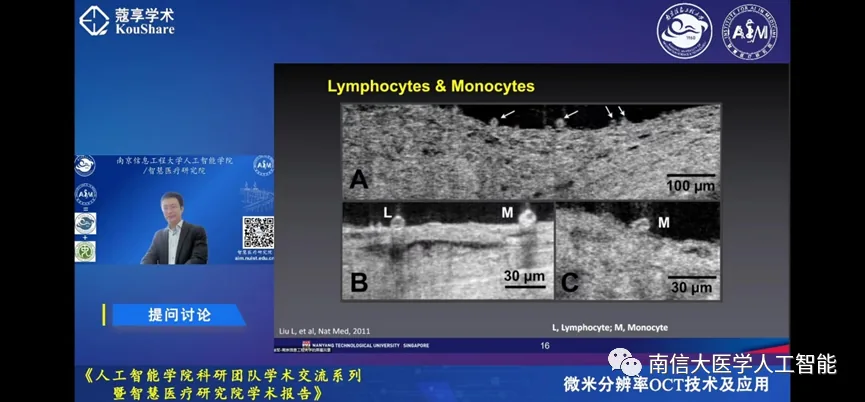
In the report, Professor Liu introduced that their team at Nanyang Technological University has conducted a series of animal and human experiments based on Micro-OCT technology to verify this advanced imaging technology, including imaging of animal cervical epithelium and bladder artery adventitia, as well as imaging of human arteries. These experiments successfully demonstrated that Micro-OCT can clearly distinguish the subcellular structure of various epithelial tissues. At the same time, thanks to the improved resolution, Micro-OCT can detect cilia in the trachea and capture their movement patterns, which provides technical support for research on mucosal clearance mechanisms. Not only that, these experimental experiments further demonstrated that Micro-OCT can clearly distinguish the cytological characteristics of normal, low-grade intraepithelial neoplasia and high-grade intraepithelial neoplasia, which has potential application value in the field of early cancer screening and diagnosis.
At the end of the report, Professor Liu told us about the three major technical bottlenecks that Micro-OCT still faces: 1) the limitation of high lateral resolution and imaging depth of field; 2) the impact of phase distortion caused by optical components and imaging tissue on image quality; 3) the problem of insufficient imaging penetration depth. In order to reduce the impact of the above situations on images, Professor Liu’s team carried out corresponding system optimization research, aiming to further promote the application of Micro-OCT in actual clinical applications. At the same time, with the development of artificial intelligence technology, Professor Liu also looks forward to combining machine learning technology in future research to help improve the performance of imaging systems.
The academic atmosphere was strong during the report. Zhang Yi, director of the Interventional and Vascular Surgery Department of Zhongda Hospital Affiliated to Southeast University, and Jiang Yiqun, director of the Pathology Department of the Dermatology Hospital of the Chinese Academy of Medical Sciences, had in-depth discussions and exchanges with Professor Liu online on issues of interest. Teachers and students participating in the offline meeting also actively asked questions, and Professor Liu also gave detailed answers to the questions one by one. At the same time, there was an in-depth discussion on the future development direction of Mico-OCT imaging technology, as well as related cooperation in the detection of clinical skin diseases, early cancer screening of digestive system diseases, and potential applications in the field of ophthalmology.
Introduction to Professor Liu Linbo:
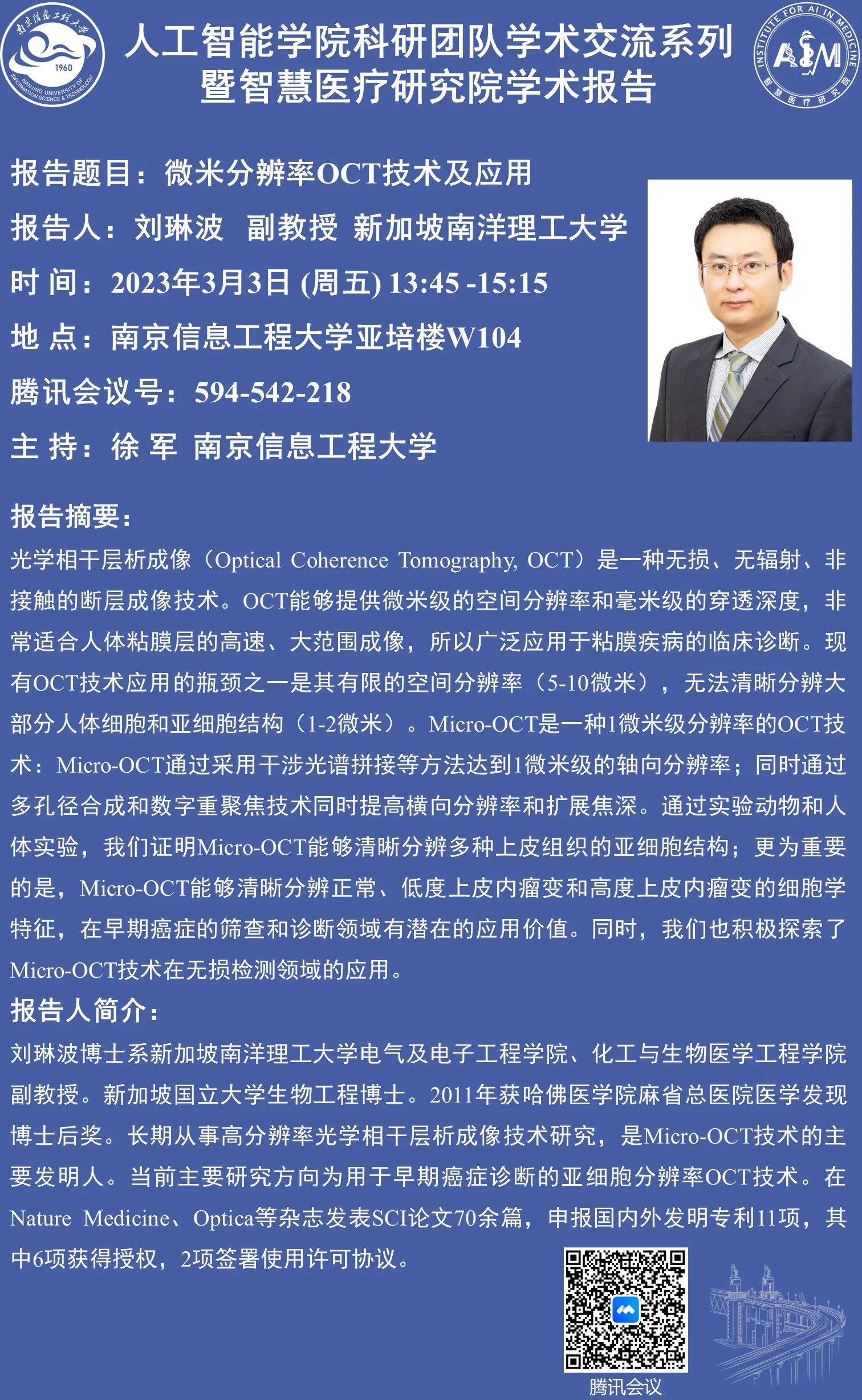
Dr. Liu Linbo is an associate professor at the School of Electrical and Electronic Engineering and the School of Chemical Engineering and Biomedical Engineering at Nanyang Technological University, Singapore. PhD in Bioengineering from the National University of Singapore. In 2011, he received the Medical Discovery Postdoctoral Award from Harvard Medical School and Massachusetts General Hospital. He has long been engaged in research on high-resolution optical coherence tomography technology and is the main inventor of Micro-OCT technology. The current main research direction is subcellular resolution OCT technology for early cancer diagnosis. He has published more than 70 SCI papers in journals such as Nature Medicine and Optica, and applied for 11 domestic and foreign invention patents, of which 6 were authorized and 2 signed license agreements.
Picture/Luo Yuemei Text/Luo Yuemei
Translated from the original Chinese source.