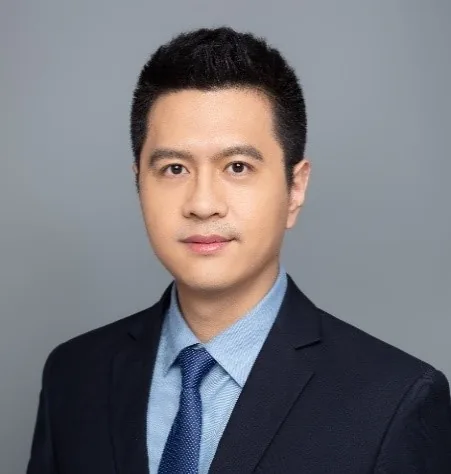
Lu Jian

Lu Jian

Lu Jian, Ph.D. in Imaging Medicine and Nuclear Medicine, is an attending physician at the Interventional and Vascular Surgery Department of Zhongda Hospital Affiliated to Southeast University, a best young scholar at Southeast University, a postgraduate tutor at the School of Medicine, and a young and middle-aged academic leader in Jiangsu Province’s “333 High-Level Talent Training Project.” Selected into the National High-Level Talent Program. Focusing on innovative areas of tumor treatment such as radioactive particle stents and interventional surgical robots, the research results have been recommended by 7 domestic and foreign medical guidelines. Main research directions: intelligent diagnosis and treatment of major diseases, research and development of intelligent interventional devices, and clinical research on artificial intelligence.

Hosted 6 national/provincial and ministerial level projects such as the National Key R&D Program Sub-Center Project, Jiangsu Provincial Key R&D Plan, and the National Natural Science Foundation Youth Fund. Has published 20 high-level papers in English as the first/corresponding author (including co-authors), with a cumulative impact factor of over 200 points. Including Lancet Gastroenterol Hepatology (cover article), Journal of Hepatology and other top medical journals. Authorized/applied for 14 patents.

He serves as the deputy director of the Particle Physics Expert Committee for Minimally Invasive Tumor Treatment of the Chinese Anti-Cancer Association and the deputy director of the Youth Committee of the Interventional Physician Branch of the Jiangsu Medical Doctors Association. He has successively won the Youth Academic Award from the three major interventional radiology societies in North America, Europe and Asia-Pacific, as well as the first prize of Jiangsu Province Science and Technology Award, the first prize of Jiangsu Province Medical New Technology Introduction Award and other scientific and technological awards.


Translated from the original Chinese source.
Share :

Related Posts

Qi Xiaolong

Qi Xiaolong

Qi Xiaolong, professor, doctoral supervisor, selected into the National High-Level Talent Program, assistant to the president of Zhongda Hospital Affiliated to Southeast University, director of the Center for Portal Hypertension; founder of CHESS, chairman of the alliance; founder of PH&C, editor-in-chief of the journal; chairman of the Portal Hypertension Alliance of the National Center for Infectious Diseases; Chairman of the Portal Hypertension Professional Committee of the Chinese Association for the Promotion of Human Health Science and Technology; Vice Chairman of the Portal Hypertension Outreach Committee of the American Society for the Study of the Liver.

Read More
Anant Madabhushi

Anant Madabhushi

Dr Madabhushi’s pioneering work in developing novel machine vision and AI based approaches for interrogating routinely acquired digital pathology and radiology scans is helping oncologists treat patients suffering from brain, lung, prostate, colorectal, breast, and blood cancer. Most recently, to help combat COVID-19, he adapted technology from his work on lung cancer to create a new artificial intelligence tool that uses computers to digitally analyze CT scans to identify patients who require ventilators for the coronavirus5. He places special emphasis on eliminating racial disparities in medicine by identifying underlying biological variations in disease appearance between populations, which can then be specifically targeted, to enable population-based personalized risk calculators. He is also taking this logic to another minority population, Veterans, where their unique exposure to wartime environments and particular lifestyle choices, make them different from the civilian population and thus requiring training with Veteran data.

Read More
Zeng Xian

Zeng Xian

Zeng Xian, Ph.D., is a lecturer at the School of Artificial Intelligence of Nanjing University of Information Science & Technology, and a core member of the Jiangsu University Key Laboratory of Intelligent Medical Image Computing and the Smart Medical Research Institute. He graduated from Huazhong University of Science and Technology with a bachelor’s degree in 2016 and a doctorate from Zhejiang University in 2022. The research direction is clinical big data-driven medical clinical intelligent decision-making auxiliary methods, which mainly include congenital heart disease risk warning and prognosis analysis, patient similarity analysis based on electronic medical records, etc. Currently, he has published 6 SCI papers as the first author or co-first author, including JAMIA (IF=7.9), the top journal in the field of medical informatics, and Scientific Data (5-year IF=11.2), the flagship data journal of the Nature series.

Read More