Jiao Yun
- IMIC Lab
- People , Medical teacher
- July 29, 2022
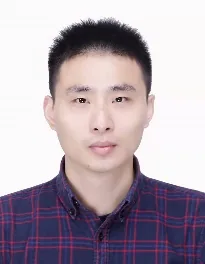
Jiao Yun, a doctor of engineering jointly trained by Southeast University and the University of Pennsylvania, is the director of the Network Information Center of Zhongda Hospital Affiliated to Southeast University, associate professor of radiology, and master’s tutor. He has long been engaged in research in medical informatics and medical imaging. Main research directions: biomedical informatics, medical imaging and artificial intelligence. Currently, he has presided over one National Natural Science Foundation of China general project, one youth project, one Jiangsu Provincial Natural Science Foundation general project, and participated in the National Key Basic Research Program (973 Program) as an academic backbone. He has participated in several National Natural Science Foundation of China general and major research projects. He has won the second prize of the National Science and Technology Progress Award in 2016 (ranked fifth), the first prize of the Science and Technology Progress Award of the Ministry of Education in 2012 (ranked seventh), the second prize of Jiangsu Province Science and Technology Award in 2014 (ranked fourth), and the 2013 Jiangsu Provincial Science and Technology Award. The third prize of Jiangsu Province Science and Technology Award (ranked fourth); won the “Young Medical Talents of Science, Education and Health Project” of Jiangsu Province (2017). He serves as a standing member of the Information and Application Security Protection Academic Committee of the Chinese Society for Health Information and Health Medical Big Data, a member of the CHIMA Youth Committee, and a member of the Physics and Engineering Group of the Magnetic Resonance Professional Committee of the Chinese Society of Medical Radiology. He has published more than 30 SCI articles in total.
Research direction: Medical imaging big data and artificial intelligence: 1. Neuroimaging: Use multi-modal imaging, image analysis statistics, machine learning and other technologies to study imaging markers for the occurrence, development and outcome of neurological-related diseases such as neuropsychiatric diseases, metabolic encephalopathy, brain injury and so on. 2. Medical imaging big data: Establish a standardized processing process for medical imaging data, and build an imaging big data platform for cardiovascular, cerebrovascular, and tumor diseases. 3. Radiomics and artificial intelligence: Construct a multi-disease clinical cohort, integrate clinical indicators, imaging data, genetics and other big data resources to form radiomics big data, apply artificial intelligence algorithms such as deep learning to quickly and accurately complete disease damage assessment, and establish early diagnosis models and prognosis models for related diseases to provide basis for diagnosis and treatment.
Translated from the original Chinese source.