Intelligence for better medicine
The Jiangsu Key Laboratory of Intelligent Medical Image Computing brings AI, information science, engineering, and clinical medicine together to solve consequential problems in human health.
Explore our research
Computational medicine, grounded in clinical questions
We work across scales and modalities—from whole-slide pathology and medical imaging to electronic health records, multi-omics, and physiological signals.
- Computational pathology
- Medical imaging and analysis
- Brain science and neuroimaging
Engineering that returns to the clinic
Our work connects methodological innovation with prevention, diagnosis, prognosis, treatment planning, intervention, and longitudinal monitoring.
- Multi-omics and medical big data
- Multimodal physiological signals
- Wearable sensing and intelligent devices
An international, interdisciplinary community
IMIC educates students from undergraduate through doctoral level and welcomes clinicians, engineers, data scientists, and collaborators from around the world.
- Joint engineering and clinical supervision
- International seminars and summer schools
- Open positions for students and researchers
From the laboratory
Latest news
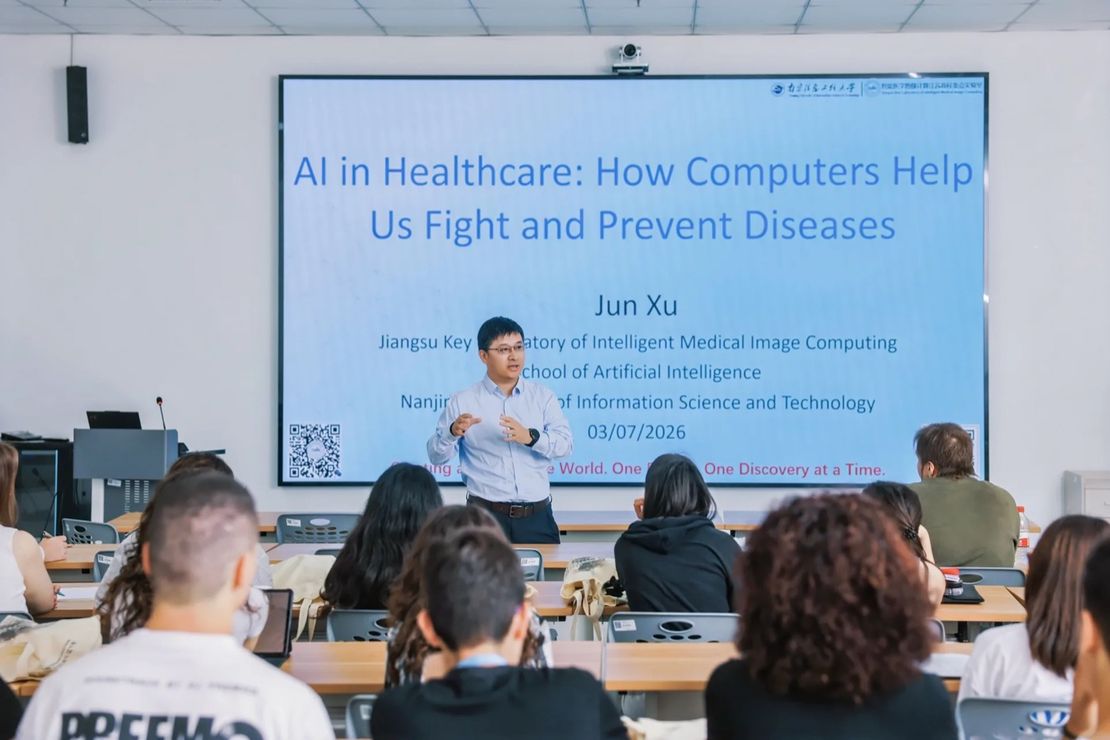
Using intelligence as a bridge to protect life and health | IMIC Lab will undertake the 2026 series of international medical artificial intelligence training courses
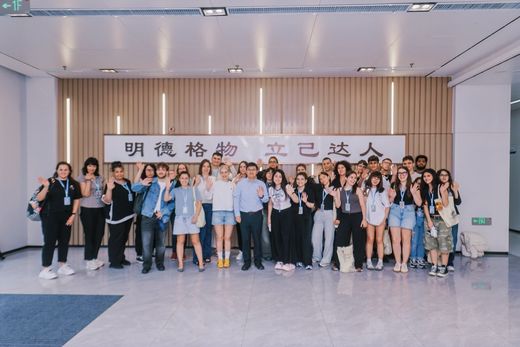
From mid-June to early July 2026, the Jiangsu Key Laboratory of Intelligent Medical Image Computing (IMIC) of Nanjing University of Information Science & Technology undertook the teaching of the “2026 International Training Course on Medical Artificial Intelligence for Developing Countries”, “2026 Bulgaria Training Course” and “2026 International Summer School Camp”. This series of academic activities focuses on the core theme of “from multimodal medical data and imaging phenotypes to clinical decision-making” and brings together experts and scholars, health department managers, medical institution experts, and young trainees from dozens of countries and regions, including North Macedonia, Ghana, Turkey, Jordan, Nepal, Uruguay, Laos, Myanmar, France, Germany, Bulgaria, Russia, Italy, Malaysia, and Indonesia. Through systematic teaching of cutting-edge algorithms, academic reports by scholars, and practical teaching of interdisciplinary applications, the intersection and integration of “carbon-based life” and “silicon-based wisdom” are deeply deconstructed.
Read More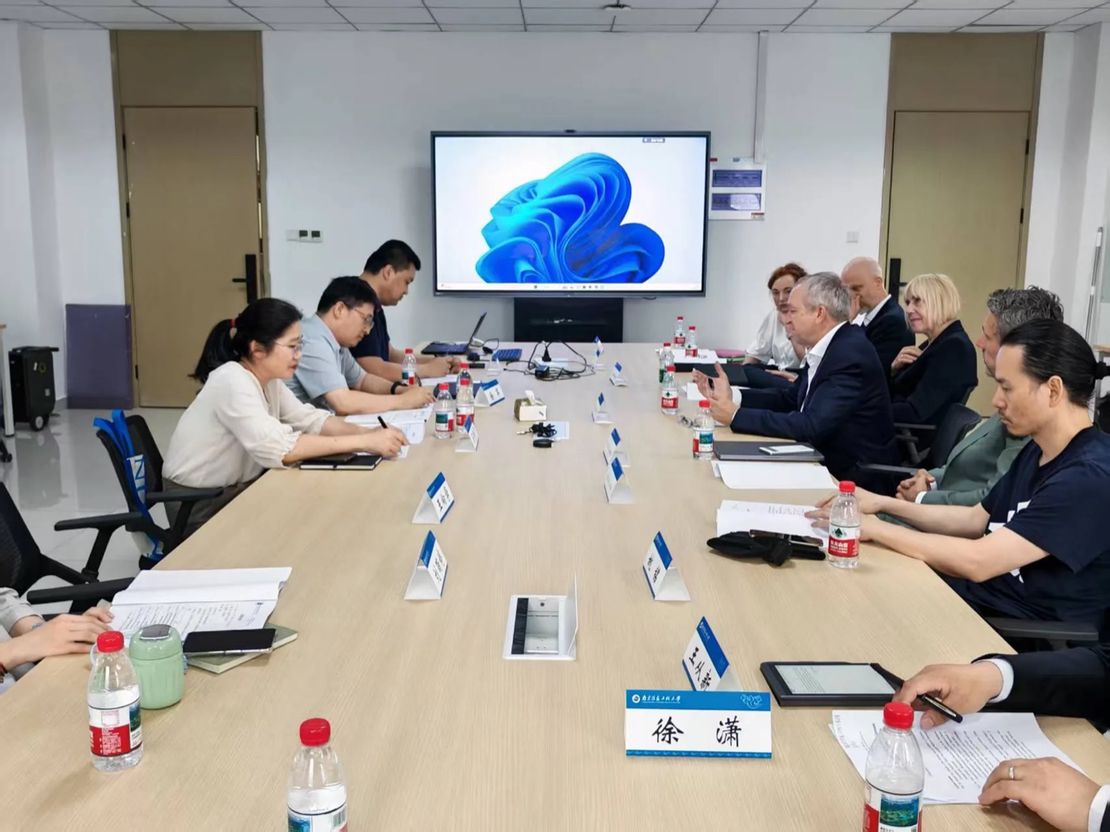
Professor Roland Eils, academician of the German National Academy of Sciences, and his delegation came to the school for an exchange visit
On the afternoon of May 14, Professor Roland Eils, academician of the German National Academy of Sciences and executive director of the Institute of Intelligent Medicine of Fudan University, and his delegation were invited to visit our school. The accompanying experts include professors and researchers from Fudan University, Charité Berlin, Freie Universität Berlin, Max Planck Institute for Heart and Lung Research in Germany, as well as Ms. Liu Yuting, scientific research director of the Institute of Intelligent Medicine of Fudan University, and Mr. Li Jiebing, an industrial consultant. Representatives from Su Chang Co., Ltd. (Hong Kong), Jiangsu Soho Xinzhi Group Co., Ltd. and other companies accompanied the visit.
Read More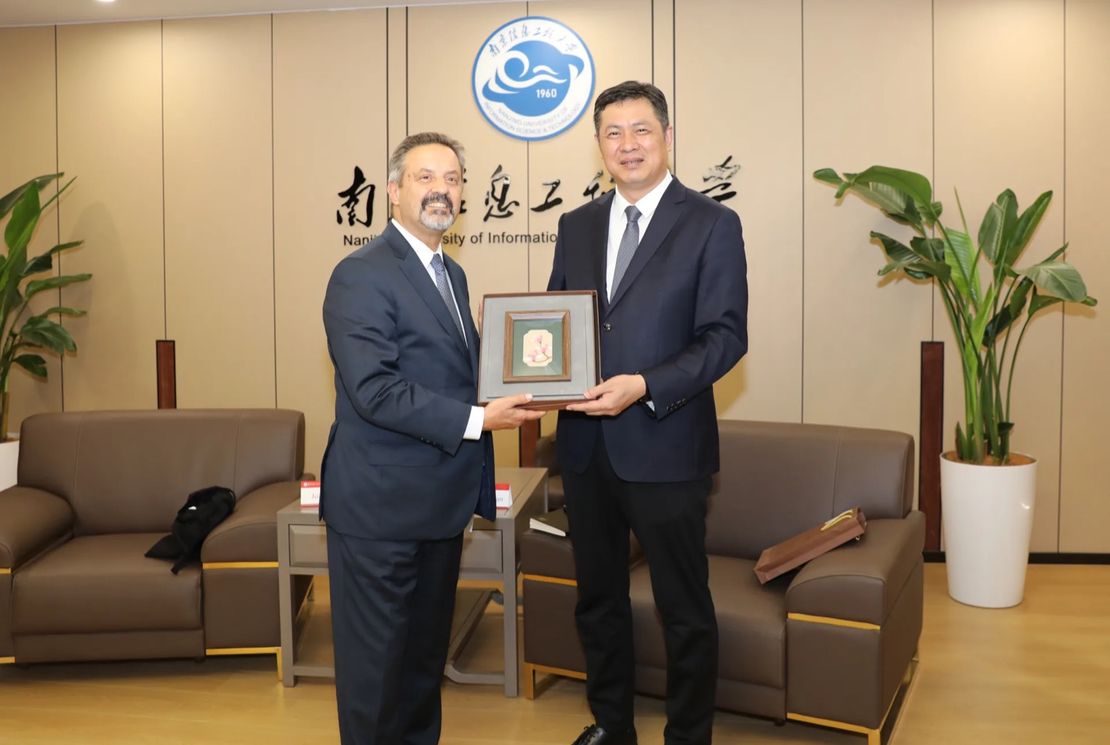
NEWER Biomedical Engineering 3+2 Bachelor's and Master's Bridge Program | Renew yourself and connect with the world - In NEWER, foresee your future
Project introduction and vision The “NEWER Biomedical Engineering Excellence Bridge Program” jointly launched by the Laboratory of Instrumentation, Biomedical Engineering and Radiation Physics (LIBPhys) of the New University of Lisboa (NOVA) in Portugal, the Key Laboratory of Intelligent Medical Image Computing (IMIC) of the School of Artificial Intelligence (College of Future Technology) of the Nanjing University of Information Science & Technology (NUIST), and the China-European Institute of Artificial Intelligence in Medicine (SEAM) is a 3+2 undergraduate and master’s degree integration project between Nanjing University of Information Science & Technology and the New University of Lisboa in Portugal. This project aims to further implement the strategic cooperation agreement between Nanjing University of Information Science & Technology and the New University of Lisboa in Portugal signed in July 2025, to build an education and scientific research bridge across Europe and Asia, and to deeply integrate the top faculty, teaching resources and unique advantages of the two universities in the field of biomedical engineering.
Read MoreDiscovery & translation
Research highlights
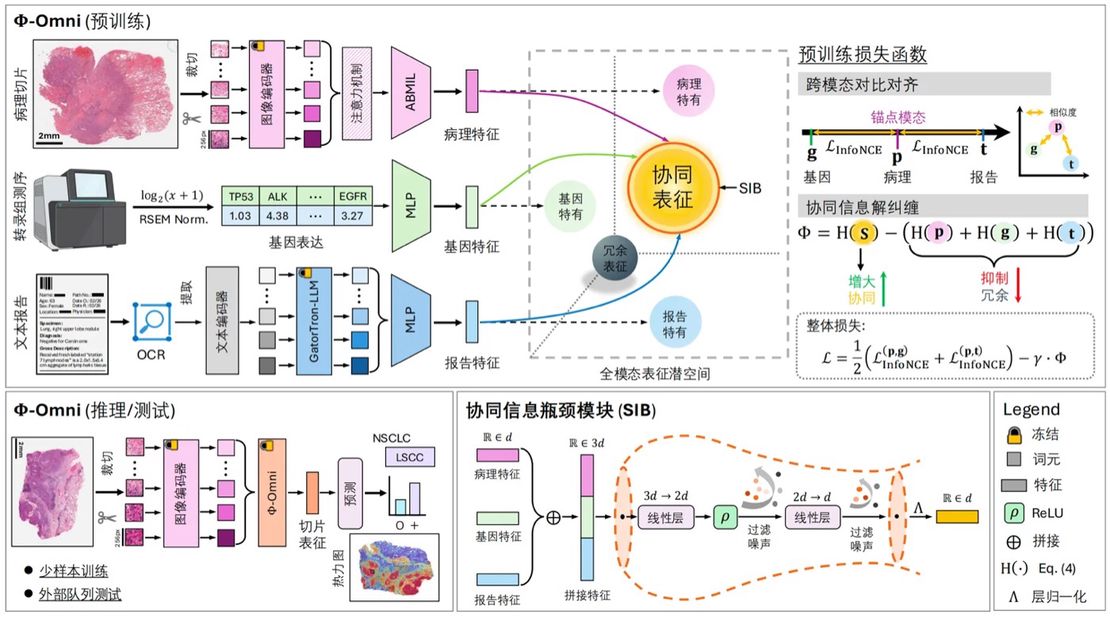
Many recent achievements of IMIC laboratory have been accepted by top conferences in the field.
From top journals to top conferences, the academic influence of Jiangsu University Key Laboratory of Intelligent Medical Image Computing (IMIC) is expanding in multiple dimensions. The IMIC Lab has been reporting frequently recently. A number of original results focusing on cutting-edge exploration have not only been steadily published in top journals, but have also successfully entered many top academic conferences. This article will introduce in detail the latest research progress of the IMIC laboratory at the top conference stage in the field.
Read More
2026
Hui Liu, Yanfeng Wu, Tingting Xue, Zhe Du, Jun Xu, and Tao Jiang, Machine learning-assisted parametric analysis and multi-criteria optimization of building performance: A case study on indoor environmental quality and energy efficiency, Energy Conversion and Management , vol. 349, 120825, 2026.[ Link to paper ]
Read More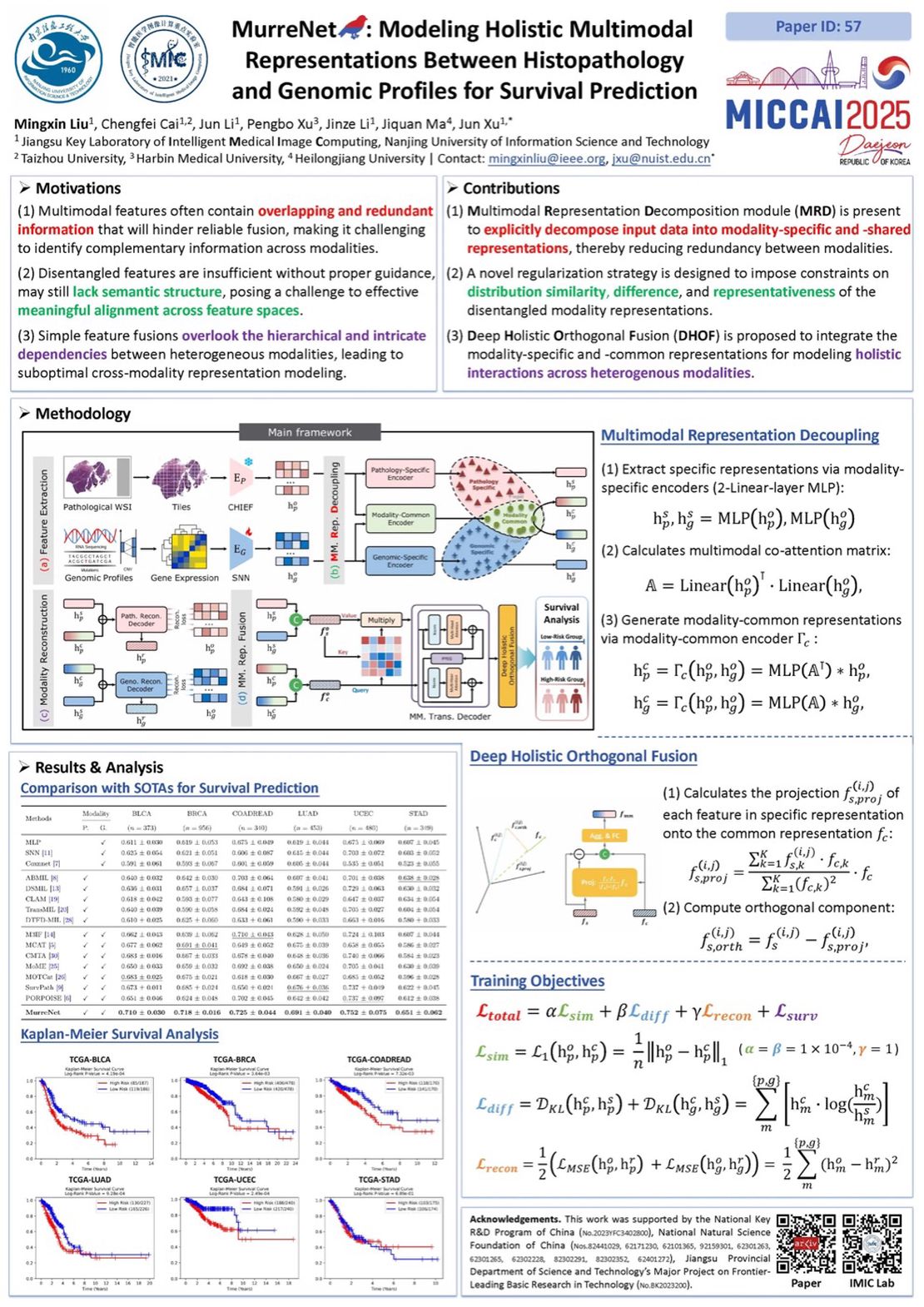
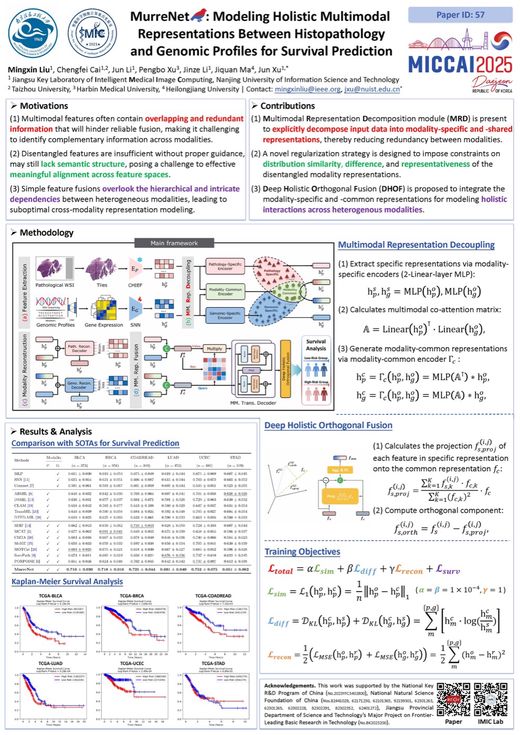
A holistic multimodal interaction model between histopathology and genomic profiles for patient survival prediction.
Abstract: Cancer survival prediction requires the integration of pathology whole-slice images (WSI) and genomic atlases, which is a challenging task due to the heterogeneity of the model itself and the complexity of modeling inter- and intra-modality interactions. Current methods usually adopt simple fusion strategies for multimodal feature integration, which cannot fully capture modality-specific and modality-common interactions, resulting in limited understanding of multimodal correlations and poor prediction performance. To compensate for these limitations, this paper proposes a multimodal representation decoupling network (MurreNet) to advance cancer survival analysis. Specifically, we first propose a multimodal representation decomposition (MRD) module to explicitly decompose pairs of input data into modality-specific and modality-common representations, thereby reducing redundancy between modalities. Furthermore, we further refine and update the decoupled representation through a novel training regularization strategy that imposes constraints on the distribution similarity, dissimilarity, and representativeness of modal features. Finally, the enhanced multi-modal features are integrated into the joint representation through the proposed deep ensemble orthogonal fusion (DHOF) strategy. Extensive experiments based on six TCGA cancer cohorts show that our MurreNet achieves state-of-the-art (SOTA) performance in survival prediction. This work was accepted by MICCAI2025, the top international conference in the field of medical image computing.
Read More
Build the future of intelligent medicine with us
We welcome outstanding students, postdoctoral researchers, faculty candidates, clinicians, and international collaborators.
View opportunities